short story

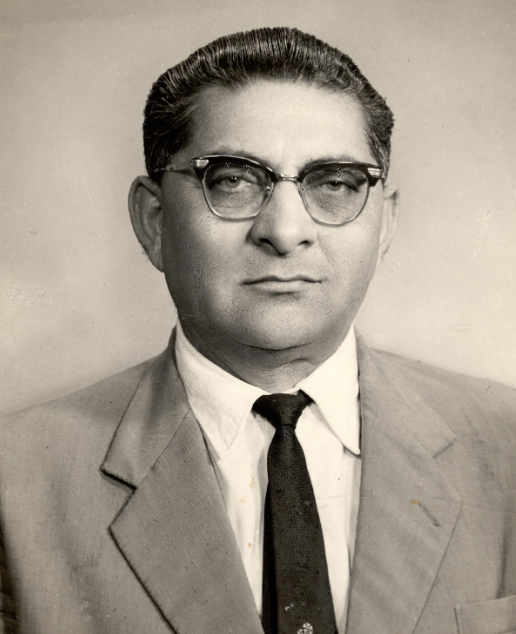
Ahmed Dawood

Titan Implosion: A World Connected, A Story of Humans

A team of five crew members perished on June 18, 2023 on their voyage to explore the wreckage of Titanic. From the news media I also heard each of them paid 250,000 US dollars to pay for the voyage. Although sad, I have no special interest in exploring to what the super rich does with their money and resources. That was until two days later when my mind was drawn to the event hearing that two of the ill-fated people had last names “Dawood”, Pakistani Industrialists. My curiosity sprang up immediately and I could hardly contain it. So I jumped into action. But why? I am not related to this family, my upbringing is far more run of the mill downtrodden compared to this family, I am not even Pakistani, they don’t even know me! Then why am I so curious to know about the two perished billionaires laying 13,000 feet deep in the North Atlantic? Two words about them seized my mind: the last name “Dawood” and “industrialist”. In the 60s and 70s I grew up in a remote jungle town of the then East Pakistan established by a sprawling paper mill, called Karnaphuli Paper Mills, which was at that time the largest paper manufacturing facility in Asia. The factory owner also established a school to educate the children of the workers there and that is the school I had studied from nursery to 10th grade. Not surprisingly, name of our school was also: Karnaphuli Paper Mills School(K.P.M. School). This paper mill was owed by Ahmed Dawood, the patriarch of the family. This was the flagship industry among many he owned across Pakistan. My mother used to be employed in this school as a teacher also. Ahmed Dawood was born in a small town in British colonial India who at his early teenage years had moved to Mumbai to establish his business. An orphan, and a self-learner, having no formal education, he showed his talents in business from very early on. In 1947 with the division of India, he moved with his extended family to West Pakistan, almost empty handed. But talent of entrepreneurship doesn’t stay dormant. He started his business in newly independent Pakistan and soon started several industrial ventures in West Pakistan and eventually extending his industrial empire in both West and East Pakistan. He was reported to be very close industrial advisor of one time military strongman and president of Pakistan, Ayub Khan. Although not formally educated himself, Ahmed Dawood patronized education and invested heavily in this sector including the school where I got my education. I still remember every few months his factory used to donate papers, reams of it, rulers, geometry boxes, school equipment and other goodies in addition to funding free education and bearing all the expenses of the school. His mill also fully funded our Boy Scout programs, cricket and football games and other extra-curricular programs for children to develop. Most importantly, as a demonstration of his direct commitment and patronization, to this school, Ahmed Dawood himself would take part in the annual ceremony of students promoted to the next grade and prize distribution. It used to be festive day with a whole day of celebration and entertainment for all the teachers, students, guardians and the whole community at large. For me such a day came in one summer day of 1967, when I was in Second Grade in my elementary school. All children who secured positions from 1st through 3rd in each class and in other activities were lined up in a separate row. On that day our Headmaster announced the names one by one as each child walked up to the podium, shook hands with Ahmed Dawood, who then handed over the reward to the child in the midst of thunderous claps of the assembled crowd. Eventually when the turn for second graders came my heart was pounding as my name was announced, I was ushered by our homeroom teacher to walk towards the podium to accept the prize from Ahmed Dawood. He was rather a chubby bespectacled man with a constant indefatigable smile on his face. As I approached near him face to face, and our eyes locked on with each other as I looked up to to him, instead of shaking his hand with me, he lifted me up with both of his hands holding me by the sides of my chest and placed my little body rather effortlessly on the table where the prizes were kept. Now I was looking down at him and he was looking up to me; his smile turning into a laughter as he extended his right hand towards my little hand in the midst of laughter of the crowd with their clapping hands. We shook our hands, my little hand totally buried in his adult hand, and then he handed me the prize: a forest green school bag. I used this forest green bag for several years, its strap across my shoulder was rather long even after adjustment of the buckle, and carefully keeping my books and note books inside it, at times making it even heavier than myself. To me it symbolized my achievements and it was an embodiment of my childhood pride and I loved to show it off. It was a direct reward to my hard work. It was gratifying. But more importantly, I associated it with the most accomplished and the most successful person that I knew directly at that time, a person who touched my heart by his kind gesture of lifting me up on the table before shaking his hand with me. Without even pondering over it I knew that was something special and unusual. That was a great boost to my childhood ego. So when I heard and read in the news media that the two of the five perished people in Titan, the ill fated submersible on way to Titanic were surnamed Dawood, my mind was ceased by the compulsion of finding their

Titan Implosion: A World Connected, A Story of Humans Read More »
I hate train

I Hate Trains

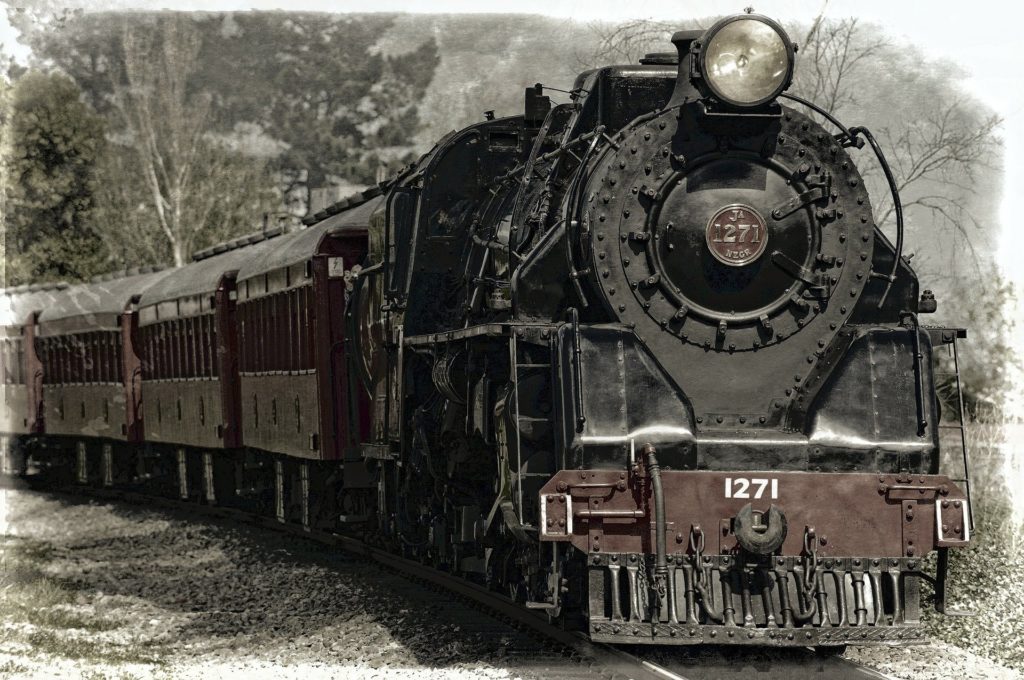
In the 1940s as the  world was in turmoil with the drumbeats of war, as the Nazis were consolidating power in the center of Europe, the rural America and in the heart of Texas many were still living a subsisting life. John was such a person. His father was a subsisting farmer in the Texas gulf Coast, rice farmer to be specific. But their family were of humble background sharecroppers, they had no property of their own. They had no accumulated capital to be able to lease even better properties. So they did what many poor landless farmers were compelled to do: lease low lying mosquito infested coastal property from the landlord for a year or two and raise his family with the share cropping arrangement. They had no permanent house, the family’s house was a makeshift wagon, towed behind a tractor. The family of four children and a wife, all were housed in this wagon. This was nomadic life, since landlords in those days did not want anyone to be too comfortable in using their properties for too long of a time. So the family had to move frequently, sometimes even every year. Wherever the family moved, the first job for their father, the head of household was to set up a pitcher-pump or hand powered pump and to set up an out-house for the family. His next job was to go to go over the work site of rice paddy field and set up another pitcher-pump and to fill up the rice field with water. its is said that among all farmers who all work extremely hard, rice farmers are the most hardworking by very nature of the job. the water level has to be constantly maintained and at the right time, day or night. imagine filling up acres and acres of porous muddy fields with right level of water pumping with your hand, no electricity, no diesel no gasoline! According to the atuthor of Tipping Point Malcolm Gladwell, rice farming is the most laborious job in the world, people who had not farmed rice has no idea how much labor it takes to produce any rice, it is a day and night work, work through evenings and mid nights, work through burning sun and pouring rain. Rice farm or paddy fields had to be submerged in water at the exact time and water level had to be maintained exactly and varies from cycle to cycle of the life of the rice paddy. Rice farmers get least of the sleep of all probably, less than the Silcon Valley upstaters perhaps. Our protege went to work for rice farming since his very childhood, he had worked there before even he stepped foot in any school and then continued through it spent hours and hours pumping the pitcher pump for the rice paddy to be submerged in water had no time to scratch the swollen wound blood sucking mosquitoes had left him since he had to use both hands to power the handle of the pitcher pump. He had to wait till coming home as a young child to attend to the sores of mosquito bite which scratched intensely and then turned to so many sores and the scars are still there in his 7th decade of life. He promised himself not to be rice farmer ever in this life and to get a better life for him and his future family. So he moved further east of Texas and landed a job in an industry doing manual labor at 3 dollars and 75 cents per hour. As he worked hard he was noticed and he kept on developing his skills. He eventually moved to the technical department and started learning about machineries. In few years he became a crane operator and started earning a decent sum of money for his family. By now he had a beautiful wife and two daughters. He had just bought a new home and the family was content and was settling down. To keep up with his ambition and to pay off the home loan earlier, he started doing another part time job in the Sheriff’s office, in those days they used to call them “Deputy Marshall”. His life was good by now, a family and a nice home, the memories of hand pitcher water well, the back breaking works on rice paddy day and night, the struggle to keep the water level high or low depending on the cycles of life of paddy fields and mosquito infested swamps were far gone but still haunted his memories. He finally achieved his American dream in the best way ever known: his own hard work and honest work habits. His older daughter was 15 and younger one was 9, one Saturday as he was working on his bathroom to make it look even better than he had bought it in. This was about mid morning. His family decided to go to skating. His oldest daughter was like any other teenager of her age, developing interest in boys rather than in helping him or interest in household help. The younger one was a different story, she is daddy’s buddy. She is like her daddy, insisting on helping him in any chores big or little. On this Saturday the family decided to go for skating in the nearby town, a drive of 20 minutes. While this was the idea of the older daughter, the younger one wanted to stay back with her father to help him in the bathroom beautification work. But him being on call in his part time job of Deputy Marshall in the small town of Texas, he told the young daughter, “You have to go with mom and sis, I cannot leave you alone in house if I get called by the Sheriff’s office”. “But I want to stay at home and help you daddy” she insisted. “I know baby, but you have to go with your mother, I am on call”, he

I Hate Trains Read More »

Saying Thank You to Patients

The year was 1990. I was in Detroit, Michigan working as a resident physician in Internal Medicine. Detroit was dilapidated, its old structures were crumbling, boarded up unkempt houses in neighborhoods once humming with life were now empty, desolated, overgrown with weeds. Brick walls of the old houses, once rock-solid were now fragile and cracked, in some of which parasitic plant lives had found foothold telling the story of once mighty Motor City. A drive through such neighborhoods evoked an unknown anxiety and fear that was only interrupted by sight of an occasional industrial park, equally gloomy, in disrepair, hauntingly desolate, behemoth brick buildings with broken glass windows and ragged pitched roofs still oozing melted snow, as if only kept alive in this state of coma by some unknown force just to remind people of the old industrial glory of Detroit. Coming from Bangladesh, an overpopulated country of 2000 people per square miles, it was terribly lonely for me not to see any people on the streets and neighborhoods deserted whereas in my home country it was hard to see an inch of empty spot devoid of humans. I was struggling in my conscious and subconscious to reconcile and digest the contrast. Loneliness that I found impossible in Bangladesh, now in Detroit was over abundant and almost overwhelming. Demand of residency training, both physical and mental vigor that is called for from a young trainee doctor, kept me busy and had distracted me somewhat, perhaps even protected me from the malady of loneliness. Working in a large urban medical school training program I needed to rotate through many different hospitals. Allen Park Veterans Administration Hospital and Medical Center was one such a place. Allen Park, twenty minute South and West of Detroit was a small working class community of Downriver area. Houses were small but neat, yards were tiny yet tidy. The imposing structure other than nearby shopping mall was the VA Hospital. As I drove the very first day of internship towards this hospital, the first sight of the sprawling red-brick building stuck right next to the freeway, with its multi-floored structure and hundreds of small panes of glass windows on all sides seemed like I was being watched by a giant alien with hundreds of eyes looking out over the plains. The sight was overpowering. As I approached the building close, the billowing cloud of smoke from the smoking veterans on both sides of the entrance outside greeted me with an aura of Burmese Opium Den. But time is a great healer; distance is the halcyon; work is the opium; my old familiar sights and sounds from the home country of Bangladesh faded gradually, and soon realities and demands of current surroundings took the center stage. Curious part of my brain sprang back into action again, perhaps I subconsciously realized it to be a healthy distraction from the monotonous grueling work of patient care at the VA Hospital. Often in call nights, I would look through the cracks and crannies of the old hospital building noticing the fine color difference of the two buildings put together, the subtle difference of the pinkish bricks, the variation of the poured concrete, the rusted iron rods sticking out as if I was driven by an impulse to find an old skeleton hidden somewhere. There are times at night I would circumnavigate the old buildings as if I were the Columbus on a mission to discover America. The reason behind as to why the Federal government put this huge hospital in such a place outside the city limits of Detroit was simply another Henry Ford story. In the dark days of Great Depression of the 1930s, the Ford family had donated 38 acres of land to the federal government in Allen Park, MI, as an inducement to set up this VA hospital. The construction work began in 1937. At the end of Second World War as the rank of Midwestern veterans swelled, the hospital was expanded in phases to accommodate the increasing demand. The architects in charge of these renovations never wanted to hide this fact perhaps, because any observant set of eyeballs could easily still tell each additions of the hospital separately. This VA Hospital was gem of a place to learn for any aspiring medical student. Veterans and the teaching faculties were always easy going compared with elite private hospitals and sophisticated patients therein. Veterans on the other hand, did not have any special demand upon the trainees. VA Patients were always compliant and unabashed at the request of physical examination and as of yet, neither there was the looming threat of malpractice law suits, nor there was any pressure from the administration to discharge anyone early to save the hospital money. In fact the pressure was opposite: to keep patients in the hospital for any reason as long as one can, medical to social. It was not unusual to keep someone for days even weeks in the inpatient hospital service because the veteran had no taxicab fare or bus ride to go home. Apparently each individual VA Hospitals used to get budgeted money allocation according to the census of the hospital. The more patients each hospital had in its rolls the more money were to be allocated. I remember one day, the chief of the hospital came in our morning round and told us to “keep as many patients in hospital as you can so our census goes up since the budget allocation time is coming up”! Inside the mammoth building it was gloomy dark with old fixtures. The walls were old and bare, as if the building was missing the touch of a woman and truly it was devoid of women at that time. In my whole time of service over several years, I only got to see two or three female veterans in this hospital. The whole hospital building was made for only men by men. The rare female veterans who were to be admitted were

Saying Thank You to Patients Read More »

Remote Medicine, How to make it Up-close & Personal

Now that we are in the midst of Covid 19 Virus lockdown, for non-emergent consults and follow ups, telemedicine via chat and video technologies are the only options for physicians and patients. In the absence of direct eye contact, how do I, as a physician, connect to patients? This is a tall order even in “normal times” when all the doctor visits are face to face. Lack of connecting with doctors or other providers of care and finding a lack of personal connection is one of the common reasons for dissatisfaction, lack of trust and compliance of the patients. The very basis of a treatment plan that we are taught from day one in medical schools around the world is “History and Physical (examination)”. In the remote medicine practiced through the technologies, a precise head to toe physical examination is not possible, so history, or better said, story is very important. In my experience, connecting with a patient at a personal level is not only important for the patient, but also for the physician. I always find better job satisfaction in connecting with a patient or for that reason, any human at a very personal level. In my own practice, after initial few days of struggle and discomfort, I have found a way to connect with my patients in a deeper level. This is very simple: asking them an open ended question to convey the message that I as a doctor am interested in them. So after the initial introduction to each other, I ask them, “Tell me about yourself”. Some of them may not still get my question, since they are not used to this and will go about describing their medical issues. In that case I emphasize, “Tell me about yourself as a human, so I get to know you as a person, tell me where were you born, how was your growing up like, who and what are important to you? What do you do for a living?” This simple method of storytelling and story listening changes the whole atmosphere and nature of the whole visit. I notice the tone and tenor of the medical encounter change right away. It makes a positive energy flow not only with the patient, but also in myself as a human. Storytelling and story listening are the most unique human attributes of human nature. This is the main reason for the triumph of our species over other species who grew up and roamed together in the plains of Africa for thousands of years according to author and historian Yuval Noah Harari. This is the main reason why millions of us can cooperate together even without intimately knowing each other. So storytelling and listening are the very life-blood of humanity and we need it more so in sickness and more of it when we are sick and vulnerable. Faced with such an welcome in the physician interview, many of my patients are open to give an immediate feedback. One such patient told me, “I am 71 year old and no doctor ever asked me to know about me!” Another of my patients told me, “This is the first time a doctor showed interest in me as a person”. In my mind, getting personally connected with a patient has benefits in several folds: 1. a personal connection with the doctors provide better mental satisfaction on the part of the patient, who naturally puts trust the doctor. 2. Patients see better value in their encounter. 3. With such feelings they are more likely to stick by the management plan of the physician. 4. It provides greater job satisfaction for the doctor himself. Physician burnout has been a much discussed issue for several years and this might be one of the ways to reduce the burnout rate. 5. It increases reputation and goodwill of the practice. Remote Medicine or Telemedicine as it is called popularly, had had a slow start until the Covid 19 pandemic upended everything in our world. Flexibility on patient care and management and keeping an open mind will be crucial now as we embrace or are compelled to embrace the new technologies for delivering patient care. We have to be more creative and imaginative than ever before to get to know our patients and in connecting with them in absence of direct eye contact, touch and feel of the physician.

Remote Medicine, How to make it Up-close & Personal Read More »

Hajj, Pilgrimage to Mecca

Hajj Pilgrimage to Mecca

The year of 1973, I was a 7th grader. Ours was a school nestled in the hilly district of remote Bangladesh. Our class rooms were crammed, with boys and girls sitting in rows of wooden benches. Among the subjects we learnt were Math, Bengali, English, Geography, History and Religious education. During period of religious education, the students used to divide up according to their respective religions, Hindus studied Hindu scriptures, even an only one Christian student in the whole class studied Christianity and Muslims studied Islam, also known as “Islamiat” education. Our Islamiat teacher was a simple down to earth man, a bespectacled thoughtful person whom we called Abu Bakr Sir. He wore scruffy beard on his face and his eyes were deep set with a sharp Aryan nose standing out in the middle of his cheek bones in a precise symmetrical formation as if a ridge of Andes mountain had risen out suddenly of the tectonic collision in the planes of Bolivia. He seemed to be always in a metaphysical world and while teaching us about the religion of Islam, he often veered off to the philosophy of religion. One day, the topic of Islamic studies was Hajj, a pilgrimage to the holy sites in Mecca called Kaaba, considered to be first place of prayer in Islamic faith, established by Adam, the first man and the first prophet of mankind in Islamic faith. It is believed by the Muslims that this place of worship had been subsequently reclaimed and restored by Abraham, and his son Ishmael, who are also prophets in Islam. This is where Muhammad, the last prophet of Islam, performed his pilgrimage and who also took part in the renovation of this universal place of worship. Any Muslim, capable physically, mentally and financially is supposed perform this pilgrimage once in a life time. However conditional to this is that a Muslim before embarking on such a rite should have fulfilled his family’s need. By family, Islam does not mean only immediate family but members of the community. To drive home the importance and meaning of Hajj pilgrimage, this day Abu Bakr Sir told us a story: one day two close friends, who happened to be Muslims decided to perform Hajj. Once they resolved themselves to such an obligatory rite, their whole focus of life was to achieve this goal. The two friends performed all the necessary actions and collected all the provisions for their long journey and ensured provisions for their respective families during their absence. Having done so, they embarked on their journey, a path of irrevocability that no one can distract them from. Soon after they had started the journey, the two friends came across a poor family which had no means to meet its basic needs. They heard poor children of this family crying of hunger. Having heard children crying of hunger the two friends had to pause and rethink about their journey and the means they had at their disposal. One friend said, “I had already promised to Allah that I am on this journey for Hajj, nothing is going to veer me off this path.” The other friend, seemed to be more reluctant and said, “It is true. But it is also true that I need to take care of my brothers and sisters before I can perform my Hajj. My decision is to help out people in distress and as long as they are in distress I cannot go to Hajj.” So he decided to give all his money and means to the needy family and returned home with a heavy heart. The other friend traveled all the way to Mecca to perform much desired Hajj as usual. In the act of Hajj, a five day event, a Muslim performs many rituals from circling the Kaaba, a sacred sanctuary of the prophets to spending a night in the open air in Arafat to reenacting the frantic run of Hagar, Abraham’s wife (slave in Bible) in between the two hills called Safah and Marwah when she was looking for water for her infant son Ishmael. During this time, Muslims also throw ritual stones at Satan, to wipe out evils from their heart. The friend who remained unwavered in his journey made all the way to Mecca performing Hajj and had accordingly performed all of these rituals continued to see his other friend doing the same the whole time. He thought, his friend had changed his mind later and came to pilgrimage just like him. After months of the arduous journey, he had returned home to find his friend was already at home. “When did you come home? And when did you change your heart dear friend?” asked the Hajj performing pilgrim to the other who donated his money to the poor family. “I had never gone to Hajj dear friend, remember I gave all my means to the poor family and therefore I had to return home and have been here all the time you were gone to Mecca”. The Hajj performing friend was bewildered and asked all the neighbors around. They all testified that the second friend had never gone to Mecca and was doing his normal duties at the hometown having returned on the half way from the journey. The Haji (one who had performed the Hajj) friend was thoroughly confused, and thought he was possessed by Djin to have seen the other friend in all the rituals of Hajj in the holy city of Mecca and Medina. He then called his friend and the two sat down together discussing the whole situation. The friend who could not make the journey understood the situation of his Haji friend and the two friends decided to seek help of a wise man to resolve the issue. The next day the two friends got up early and went to the wise man in the neighboring city. Both of them told their own stories to the wise man in details. The wise man

Hajj Pilgrimage to Mecca Read More »

The Boy Who Stole His Mom’s Money

The school house was high up on a flattened mountain top clearing of Chittagong Hill Tracts, a district in the farthest corner of Indian subcontinent and called appropriately so due to its hilly terrain and forbidding landscape of impenetrable jungle infested with year-round malaria and dengue causing mosquitoes. Its open spaces were carpeted with tall shimmering green grasses undulating languidly like a ballet dancer with the passing of humid breeze where blood sucking leeches lurked on every blade. Although surrounded by lush green rain forest, in the dog days of summer, the tormenting brew of high humidity, heat of the tropics and bright sunshine used to raise the temperature to 110 to 120 degrees Fahrenheit in the tiny tin roofed school building where four class rooms for nine to ten year old school children were housed. Currently on lease from the government of Pakistan by a giant private paper company that exploited the natural resources of the surrounding forest to make paper, no one actually knew how this building came into being. But elders say it was an abandoned hill-top Second World War era military station which in its hay days served as surveillance outpost in the Anglo-Japanese war front when the Japanese Imperial Army occupied Burma rather quickly and was knocking at Chittagong, located in the farthest South Eastern corner of British India. The building was in disrepair and dilapidated; passage of time was evident on some of its corrugated tin sheets that had curled up and rusted long ago; in some others, rusting had given way to small holes through which sunlight poured in the midday like a thin slicing sword down from the heaven.  The building base was a square of cement slab with brick walls on all sides; the cement was peeling away in many areas exposing the carnelian red bricks in places. Each of the classrooms could perhaps accommodate twenty children at the most, but now due to rapid population boom of this jungle town, fifty to sixty children were crammed in the same tiny space. Only some of the students could sit on the stools with a desk and the rest either stood on foot or sat on the floor during the class time. Children used to come on foot traversing the dusty winding road cut in between the mountains from dense settlements sprawled at the foot hills of the hilly tracts, from far and near. Then they had to climb hundreds of steps of thin stairways, curved on the steep side of the mountain to get to the class room. This was the most dangerous part of their journey to school everyday and children did it with remarkable patience and care, because they knew just one slip of stairs meant their young body will swirl down several hundred feet down below. Climbing the steep stairs by the time they had reached the top of the hill, they were already drenched in sweat. The class rooms had no running water, but there was piped water that ran near the outhouse little further away. The water was pumped through the exposed on-the-surface metal pipes, and it was as hot as boiling water in the summer. Being so hot both inside and outside the class room, the children needed a constant supply of cool water. The school had no air conditioning and in those days, children in the remote corner of East Pakistan, current Bangladesh, had never heard of refrigerator yet, let alone having one in the class room to keep the water cool. The only way they could keep the water cool is by storing water in an earthen pitcher, locally called “kolshi”. This large earthen vessel of the size of a giant turkey fryer used to be kept on the corner of the class room and students and teachers alike could pour in a little drink of cool water in their ceramic glass they all shared to keep them hydrated especially in the long hot summer days. Earthen pitcher cools down water by capillary action, a basic law of physics. One day early in the summer time the old earthen pitcher of the class broke into pieces as it grew old and could not contain the pressure of the water inside it any longer. Children had no more supply of cold water, and in their tender mind, they knew that it was essential for their life. They decided to raise money and buy a new kolshi soon. Although just few pennies in American currency, it was expensive for the children in this corner of the world, where some of them used to come to school without any breakfast and some of them could only afford to eat one meager meal a day. So raising money was difficult and yet they all pitched in with an urgency and they raised about five “takas”, equivalent of six US pennies. A boy, son of a teacher, who was voted as the “Class Captain,” was given the responsibility to safe guard the money the class had raised and it was his job to buy a new kolshi from the bazaar, one hour on foot journey from the neighborhood.  The class decided for him to accomplish this on the weekend so they have cool water from next Monday. As the Sunday came, he was ready to go to the market with the raised money to buy the kolshi. He took out the only pair of pants he had, which he always wore to school and as he put his hand in the pocket, he felt no coin! He was surprised; a shiver crossed through his spine. He put his hands on both the side pockets and then to the back pocket, but his fingers felt no money, no jingle of coins. He was at a loss and he now started sweating profusely. What had happened to the money? Did he lose it or did some one play a trick on him or had someone picked his pocket? What should

The Boy Who Stole His Mom’s Money Read More »

Prognosis: Excellent

She is a 53 year old female. I am a 55 year old gastroenterologist. I was consulted because she had suspicious tumors in her liver on a CAT scan. She has been feeling increasing distress in her upper belly and has not been able to keep anything down in her stomach for last two weeks. The pain was not the severe pain that curls you up, but it is gnawing, that eats you from inside, it is the pesty visitor who visits you at the most uninviting of the moments, it is the conversation that one has to carry on in the most importunate of the situations. I reviewed her labs and scans carefully before I enter her room. I take a pause and a deep breath and tell myself: “Hey you, cheer up, have a smile on face, and make sure your patient does not see you gloomy or anxious”.  Having obeyed my own advice, I apply several soft knocks on the door. “Come in” I hear from outside and I enter the room. Laying flat on the bed was a thin lady, ashen looking, covered in white freshly cleaned hospital blanket and the protuberant abdomen sticking out like a sore thumb from under the sheet betrayed her frail physique. Next to her sitting on the rocking chair was her male companion wearing a red bandanna on his head; his white long unkempt beard and cigarette stained handle bar mustache giving out an impression that he would be better fit to the next Duck Dynasty episode casted outdoors in the midst of nature than belonging to this claustrophobic beige colored hospital room with its fours walls closing in on the small space all the times. I have always found hospital rooms to be very interesting. Some rooms seems to be bright, others dim and dark although when I counted they exactly have the same number of flood light fitted on the ceiling and on the sidewalls. The healthcare architects are great in consistency and meticulous in attention. Master of their trade, from faucet to air conditioning vent to a small emergency switches, all of them in exactly placed in the right position, they have an uncanny skill and attention to details, nothing seems to distract them, nothing seems to make them forget even the smallest of the things in pursuit of their job of designing and planning a hospital. I never had much luck in picking their fault as far as hospital patient rooms are concerned. When I cannot explain by science, I always resort to my inner superstition: I concocted the same about the hospital rooms, since architecturally and physically they are all the same and immaculate. I came to believe, the rooms that are bright, or at least appears to be so in my eyes, patients tend to do well and the rooms that are dim and melancholic, they take their occupants into the abyss of dooms. Sometimes I wonder how the admission clerk assigns the room to the patients, is it first come first serve? Or is it at her whims? Or may be she has no choice, the computer assigns it randomly like many things now a days. In my own obsessed physician’s moments, when I get carried away with my own physical symptoms and there are times when I felt calling the EMS to take me to the hospital, not as a doctor, but as a patient. Then in my mind, like an well orchestrated Broadway drama, I go through the rehearsal: As soon as the EMS takes me to the hospital I ask the admission clerk, “I want room number……..” She will be surprised and I will look at her with authority and make sure I have the stethoscope on my shoulder, or my physician ID still displayed somewhere visible and insist, “You have heard what room number I wanted Ma’am!”. Then she might say, “But Dr. Meah, that room is taken, there is already a patient in there!” . Well, my imaginary Admission Clerk certainly got me, after all I cannot ask her to expel the existing patient, I am only a doctor, not a savvy apparatchik national figure who can order around. That’s when I feel like I should develop a secret list of good and bad rooms in the hospital, my own top secret, I will share with no one, although unethical, its use is my nuclear option, only to be used when my own life is at stake, and I come to this hospital and I will tell them give me this room number…..! “Taken”, she will answer,  “No problem, give me number……” I will say keeping my smile hidden.  “Taken”, she might say again.  “No problem, then give me number…..” as I pull out another room number from my secret private list, I know something has to work out, US hospitals have always rooms empty since most of them are made to an excess capacity.  Thus I have thought about making a secret inventory of hospital rooms, that is good and bad rooms, although, my laziness had not yet come around doing this in actuality. I introduced myself, interviewed her and after obtaining her consent, examined her confirming all the ominous signs that in medical literature we summarize as, “Stigmata of chronic liver disease” with “signs of hepatic decompensation”. She had a large liver, double the size of normal; it was filled with many marble sized tumors and beneath her wasted skin, these felt as firm as the glass marbles that I used to hide away from my younger brother underneath a cotton blanket in my distant childhood.  Normal liver feels slippery, soft, gentle and soothing to palpating finger tips of the examiner, unlike these bold and hard knots, there was something aggressive about them. I noticed her feet were swelling too and one area on the right shin had started oozing clear fluid, a sign that her liver was not able to make enough protein to keep her own fluid inside the body. Her chest was full of dreaded “spider

Prognosis: Excellent Read More »

My Patient’s Story Is My Story

I am a healthcare professional, I treat sick patients everyday, death is not uncommon in the practice of my trade. How do I mourn the death of such a dear friend and a mentor? With great sadness, humility, gratefulness and lots of treasured memories. My dear friend, our dear friend Mr. Donald Correll recently passed away. But my memory still so vivid and alive. I was one of his doctors, I have seen him numerous times and I have enjoyed every time seeing him. He is the kind of patient who becomes a friend and mentor. His story, my patient’s story is my story after all. I still remember: the year was 1995, month was September. A surgeon in the hospital I was working had consulted me on his case. I was then a young medical graduate, a medical cowboy, fresh from GI Fellowship, on the first week of practice determined to make it out all alone in Texas. The surgeon who was rather perplexed wanted my help in managing him: Mr. Donald Correll was in excruciating pain. With his permission I sat down by his bed side, I listened to his story and without ordering any other investigation, I diagnosed and started treating him. The next day in round, he was already walking on the hospital hallway and a broad smiling face greeted me: “You saved my life!” he said, holding on the thin stainless steel shaft of the IV pole, his face alight with the aura of generosity and gratitude as big as Texas. My heart was filled, filled with joy, confidence and gratitude! I had started a brand new practice: it was a tremendous leap of faith, no one was there to watch over my shoulders. Born and raised in Bangladesh, I loved America since my intelligence developed and am a total sucker of American Free Enterprise System. I headed to  the  hinterlands of Texas all alone with this belief, leaving all my support system at the University Medical Center turning down offer of being a faculty member and other jobs. This was a time of exhilaration, this was a time of fear and apprehension, it was a time of vast potential or total doom. I needed reconfirmation, I needed people to believe in me, I needed people to say: Yes you can. I needed to prove to myself if not anyone else. And Mr. Correll was just the person! I am so grateful, so humbled. People like him and others made me successful, they allowed me to deliver my promise to myself that I would be by the side of common people out in the community, my story will be their story, their story will be mine, my care will be bare, down to humanity, no frills attached. It is the spirit and good will of people like Donald who come to me as patients and friends that enriches the blood flowing in my veins, this is why I went to med school, this is why I spent my time in research and advanced training, this is the direction and lesson my parents had taught me, this is the religion I follow. Donald, a Texas rancher, later became my teacher: teaching me about land, cattle and farming and how to care for them. He is a great teacher. Today, he may not be with us among the mortals, but he is with us in spirit, and in friendship, these never die. So, my friend Donald, prayer comes from heart, it is a mutual feeling of heavenly experience. I will miss you, but you will never be forgotten. Your legacy lives on, you do not know what you have done for me.

My Patient’s Story Is My Story Read More »

Father's Day 2016: Imperfect Father, Imperfect Son

Father’s Day 2016: Imperfect Father, Imperfect Son

Father’s Day 2016: Imperfect Father, Imperfect Son A roaring father lion in the plains of Serengeti whose cub only dares to play from a distance, a father distant, a father reluctant to play silly games with the boy, but a father whose two sharp eyes were ever watchful for his son’s well being, a father who protected and a father who injected the everlasting values of wisdom, and encouraged a tireless journey towards excelling in life; such was the relation of my father and I. Such is my memory about him. My father was a busy man with a temper as volatile as high octane gasoline, a man who at times could not separate problems of his work from that of his family life. Yet a man of principle he never learned to bow down to any one, a man uncompromising to the bone of his back. My father was a handsomely featured man, a sharp Aryan nose, reminiscent of the Conquistadors of ancient India pasted right at the exact proper place of his symmetrical face, a deep investigative gaze exuded from his relatively small eyeballs. As a child, I grew up with fear of my father and my relationship with him was schizophrenic at the best. He left for work early in the morning before we were awoke, coming back from work deep into the evenings, sipping his tea he would be drowned in the newspaper of the day in the easy-chair at the porch. He was exceptionally calm most of the times yet, from time to time, he would burst into violent fits of spousal abuse, hitting my mother with his hands and feet. These rages were though not long in time, they were long in agonizing fear and all of us would scream out for help but nothing would stop him, he would hit anything, living or dead that came in between him and my mother. He was a lion with a killer instinct, once he focused his sight on the prey, he was transformed into a different deity: he was the Shiva, the Pasupati, Lord of the Beasts for that time! I was always afraid that one of these days he would not know when to stop and he would certainly kill my mother. Growing up in the sixties and seventies, as a child, I grew up with mortal fear of two things: Nuclear war between the Soviet Union and USA and my father’s rage, not knowing which one would kill us first. I was not sure which one was more dangerous. After each of such violent rages of my father, after our helpless screaming and crying, came the calm after the storm when I flew in my own world of imagination, into the land of idealism and Superheroes. I imagined myself of building nuclear shelters to save the humanity, I imagined myself to be grown up so strong that one hit of mine would knock my father unconscious; I imagined to be the Samson, to tear the lion apart into pieces. I had fallen asleep, many times flying with the wings of imagination in the distant lands of Scheherazade and 1001 nights. Back in real life at other times, my father’s care and gestures were so visible, palpable and kind. At times he was so prescient that, it left me totally confused, even with a hint of guilt for wishing bad upon him. I remember, as a little child in the days of elementary school, like many children in Bangladesh I was fond of Hilsa fish, considered a delicacy, caviar of the Bengalese. The Hilsa fish season was short lasting in those days, with no provision for cold storage yet available in the country for year round supply.  And needless to say that the fish was and still is very expensive. In one season while eating a deliciously cooked Hilsa I cried out to my mother, “Mom, I want to eat the Daddy Hilsa, not just the baby ones!” meaning the biggest of the Hilsa fish, which my father had overheard. Within few days, he bought the largest Hilsa available. Carrying it on his shoulder, a porter brought this to our house for cooking. It was about a mile journey on foot and crowd gathered around it admiring that “Headmaster”, as my father was known by his position in a local High School, had bought the largest Hisla fish for his son. Then in 1971, when I was ten years old, suddenly one day my father evacuated us from the hometown with just few hours of notice, much at the consternation of my mother.  This was long before anyone else in our town thought of doing so. A prescient action like this protected us from being witness to all the destruction, rampage and killings that would later become a daily event of life as the war broke out between independence seeking Bengalese and the Pakistan army. “A grave curse is coming down to this nation and this country”, my father predicted at that time to calm my mother down as she was worried about leaving everything behind and logistics of evacuating a large family with just few hours in hand. His prediction came out to be true to the letters on that same day of our hurried journey to escape, as we for the first time came across dead bodies floating in the rivers. His timely action meant that we were totally unscathed by the ravages of war and famine that accompanied each other shortly. During this time of war, my father was fiercely critical of the killings and atrocities committed by both sides of the conflict. Years later, by now I was in the Eighth Grade, a young teenager, crossing from one milestone to another of my life. Few of my class mates and I had to represent our school in a state examination for scholarship that was held in a town six hours journey from home. The school, which was different than the one

Father’s Day 2016: Imperfect Father, Imperfect Son Read More »

Muhammad Ali and Bangladesh

Muhammad Ali And Bangladesh: Story of Love

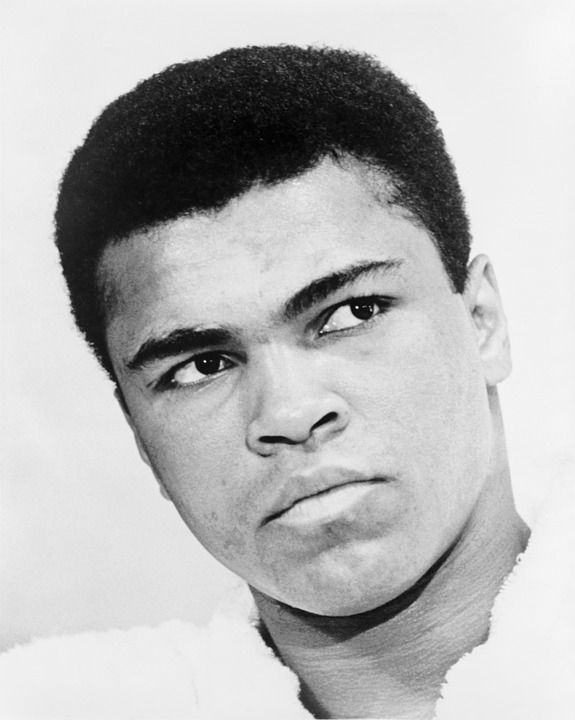
The year was 1978. In the month of February, still a mild chill persisted in the sunny mornings. This is the time Muhammad Ali visited Bangladesh. I was in the 12th grade at that time, that will be local 2nd year of Junior College. I remember Muhammad Ali to be a great healer of souls if not permanent but a temporary one. Bangladesh was liberated in December of 1971. The country’s adored son Sheikh Mujib who was “Father of the nation” lead the nation till his assassination in August of 1975. In the last years of his rule, he had declared a one party state, assuming all powers in his hand and the country was left with only four daily newspapers, all of which were government owned. In the hills of halted economic activities, 1974 saw a famine where scores of people had died of hunger and malnutrition. With the killing of Mujib in 1975, the country witnessed a series of military coups and counter coups.  Then army General Zia came to power in April of 1977 through a backdoor coup. Whole Bangladesh and its institutions were shaken by BKSAL, the one and the only legal political party, the military coups and the counter coups that followed each other. The country and its people were all wounded and scarred internally if not externally. Muhammad Ali’s visit to Bangladesh in such a time was timely and soothing to the nation, a nation in need for such consolation and redemption so badly. I remember Muhammad Ali going from town to town and wherever he and his wife Belinda went, a huge crowd waited for them singing and chanting. For days the radio played Ali songs, “Muhammad, Muhammad Ali, He is a black mountain, He says to all I am A-l-i…..” One such morning of his visit we got to know in the college that he will be visiting port city of Chittagong. He was supposed to take the road near our college. Several of my friends and I immediately left the college campus abandoning the classes and joining the crowd. After few hours of waiting and chanting finally we saw the motorcade of the champion coming down the winding road. Muhammad Ali and his family were in the second car just after the lead car and they kept their windows rolled down and waving at all the people crazy for them alternately looking right and left. The motorcade was slow and my plan worked out perfectly: I had an old English book on Islam and Prophet Muhammad, quoting and analyzing extensively on the various comments and opinions of Western intellectuals on Islam and Prophet Muhammad. I had written up a letter addressing Muhammad Ali and one letter addressing his son inviting him to be my pen pal. As the motorcade moved slowly, I slipped in the book with the letters inside and noticed it falling on the floor of the moving car. Whether they picked it up or not or even looked at it or not were not known to me. But I returned to the college dorm with a satisfied mind that I had delivered what I wanted to in whatever way I could.  With the glimpse that I had on Muhammad Ali and his family and the way they traveled keeping the window rolled down in a dusty pot-holed road of a poor third world country, I realized the love we Bangladeshis had  was not just one sided, Ali loved us back immensely in return. This is the day I realized Muhammad Ali was not just the ferocious fighter he was, he was just not the dramatic emotional exploiter of boxing; he was a great lover too. He was lover of the poor, the downtrodden, and the destitute. Our country and people whose souls were shredded into pieces by this time with the poor governance, nepotism, dictatorship, famine, coups, counter coups and the legacy of blood that haunted us since the independence were in great need for such an unconditional love. We needed the love; our souls were crying for it. Muhammad Ali did this for us. Ali was great in deed.

Muhammad Ali And Bangladesh: Story of Love Read More »