
Chittagong

Saying Thank You to Patients

The year was 1990. I was in Detroit, Michigan working as a resident physician in Internal Medicine. Detroit was dilapidated, its old structures were crumbling, boarded up unkempt houses in neighborhoods once humming with life were now empty, desolated, overgrown with weeds. Brick walls of the old houses, once rock-solid were now fragile and cracked, in some of which parasitic plant lives had found foothold telling the story of once mighty Motor City. A drive through such neighborhoods evoked an unknown anxiety and fear that was only interrupted by sight of an occasional industrial park, equally gloomy, in disrepair, hauntingly desolate, behemoth brick buildings with broken glass windows and ragged pitched roofs still oozing melted snow, as if only kept alive in this state of coma by some unknown force just to remind people of the old industrial glory of Detroit. Coming from Bangladesh, an overpopulated country of 2000 people per square miles, it was terribly lonely for me not to see any people on the streets and neighborhoods deserted whereas in my home country it was hard to see an inch of empty spot devoid of humans. I was struggling in my conscious and subconscious to reconcile and digest the contrast. Loneliness that I found impossible in Bangladesh, now in Detroit was over abundant and almost overwhelming. Demand of residency training, both physical and mental vigor that is called for from a young trainee doctor, kept me busy and had distracted me somewhat, perhaps even protected me from the malady of loneliness. Working in a large urban medical school training program I needed to rotate through many different hospitals. Allen Park Veterans Administration Hospital and Medical Center was one such a place. Allen Park, twenty minute South and West of Detroit was a small working class community of Downriver area. Houses were small but neat, yards were tiny yet tidy. The imposing structure other than nearby shopping mall was the VA Hospital. As I drove the very first day of internship towards this hospital, the first sight of the sprawling red-brick building stuck right next to the freeway, with its multi-floored structure and hundreds of small panes of glass windows on all sides seemed like I was being watched by a giant alien with hundreds of eyes looking out over the plains. The sight was overpowering. As I approached the building close, the billowing cloud of smoke from the smoking veterans on both sides of the entrance outside greeted me with an aura of Burmese Opium Den. But time is a great healer; distance is the halcyon; work is the opium; my old familiar sights and sounds from the home country of Bangladesh faded gradually, and soon realities and demands of current surroundings took the center stage. Curious part of my brain sprang back into action again, perhaps I subconsciously realized it to be a healthy distraction from the monotonous grueling work of patient care at the VA Hospital. Often in call nights, I would look through the cracks and crannies of the old hospital building noticing the fine color difference of the two buildings put together, the subtle difference of the pinkish bricks, the variation of the poured concrete, the rusted iron rods sticking out as if I was driven by an impulse to find an old skeleton hidden somewhere. There are times at night I would circumnavigate the old buildings as if I were the Columbus on a mission to discover America. The reason behind as to why the Federal government put this huge hospital in such a place outside the city limits of Detroit was simply another Henry Ford story. In the dark days of Great Depression of the 1930s, the Ford family had donated 38 acres of land to the federal government in Allen Park, MI, as an inducement to set up this VA hospital. The construction work began in 1937. At the end of Second World War as the rank of Midwestern veterans swelled, the hospital was expanded in phases to accommodate the increasing demand. The architects in charge of these renovations never wanted to hide this fact perhaps, because any observant set of eyeballs could easily still tell each additions of the hospital separately. This VA Hospital was gem of a place to learn for any aspiring medical student. Veterans and the teaching faculties were always easy going compared with elite private hospitals and sophisticated patients therein. Veterans on the other hand, did not have any special demand upon the trainees. VA Patients were always compliant and unabashed at the request of physical examination and as of yet, neither there was the looming threat of malpractice law suits, nor there was any pressure from the administration to discharge anyone early to save the hospital money. In fact the pressure was opposite: to keep patients in the hospital for any reason as long as one can, medical to social. It was not unusual to keep someone for days even weeks in the inpatient hospital service because the veteran had no taxicab fare or bus ride to go home. Apparently each individual VA Hospitals used to get budgeted money allocation according to the census of the hospital. The more patients each hospital had in its rolls the more money were to be allocated. I remember one day, the chief of the hospital came in our morning round and told us to “keep as many patients in hospital as you can so our census goes up since the budget allocation time is coming up”! Inside the mammoth building it was gloomy dark with old fixtures. The walls were old and bare, as if the building was missing the touch of a woman and truly it was devoid of women at that time. In my whole time of service over several years, I only got to see two or three female veterans in this hospital. The whole hospital building was made for only men by men. The rare female veterans who were to be admitted were

Saying Thank You to Patients Read More »

American Dream: Made In USA, Used Clothes and Abraham Lincoln

In 1971 as America entered its second decade of the Vietnam War and American families  were entertained by Archie Bunker and “All in the Family” on their TV screen, in Bangladesh, a freshly independent nation, on the other side of the world as we reached our teenage years, a bleak future greeted us. The new nation’s economy broke down, politicians became corrupt and nepotism became the governing force of the day. We became the latest saga of an all familiar post colonial countries: another national story of nepotism, corruption, and inept administration mismanaging the nation’s resources. The nation in the midst of a famine, with its economy hitting the ground, and with seven children at that time, my parents had no more money to afford new clothes for all of us. Situation compelled us to be innovative and adapt to new ways of living. One such new adjustments was to buy clothes from the secondhand market that we called “Taal Company Bazaar”. The Chittagonian (local Chittagong dialect of Bengali language) word for huge unsorted piles is “taal” and thus the name of the whole marketplace for used clothes imported from the West was “Taal Company Bazaar”, a name never officially sanctioned, but a name that resonated in the hearts and minds of millions of poor and beaten down middle class; an unpretentious name, a name that conveyed the simple truth and symbolically portrayed the status of the whole nation at that time. These vendors of old clothes imported from the West used to line up their stores in shacks on the two sides of dark dirt alleyways piling in large heaps. The clothes were all mixed together, shirts, t-shirts, pants, slacks, sport jackets, formal wears, undershirts, under wears, pajamas, all together, auctioning off sometimes one piece at a time, sometimes in a bulk to individuals whose self-pride and dignity had been beaten down by the realities of failed economy of a newly liberated country, a country that promised them prosperity not poverty.   At the very inception of this market this was a shopping place only frequented by the very poor, destitute and marginalized segments of the society, the ones you see living in the slums, in card-board shacks near the swear drain, the ones near the garbage dumps, and yet ignored by the society as if they were non-existent in this world. Now, with the economic worsening of the nation, what US secretary of State Henry Kissinger dubbed as “basket case” even the middle class started loitering in these dark alleys of used clothe market. For the middle class, at the beginning buying and wearing second hand clothing from the West was embarrassing and shameful, something less than dignified. A middle class in Bangladesh in those days was the one who still had the stubbornness of mind to tolerate hunger and not begging for help openly. A poor was one who had accepted his fate and was not hesitant of begging anymore.   As proud members of the middle class, with great consternation in our hearts, we started visiting this market in the most unpopular hours of 2 or 3 pm when the heat and humidity was intolerable turning the black pitch of the road into a soft dough consistency, hoping that no acquaintance discover us in the act of buying old clothes. This was the time with intense tropical heat and people preferred to stay indoors and avoid outdoors. To avoid the discovery, it was a common practice among the middle class to alter them to the right size and then wash and starch them meticulously so as to pass it as new. Although the first users were all poor, later with further deterioration of the economy, young boys, girls and teenagers of beaten down middle class started shopping and frequenting in the dusty smelly hills of used clothes. It was still a taboo for adults or anyone with sense of self-dignity to wear them not to say for the rich. Once I discovered this bazaar, I liked it outright: my fashion started changing in such an obvious way that people around me took notice. At the beginning like any other middle class with a sense of self-pride, I started altering them to fit my size, at times my mother used to undertake the task herself using her skill of sewing facilitated by the rare fortune of having a Singer sewing machine powered by foot paddle. Then as I evolved with the changing of time, and as I got more and more amorous with the notion of the United States, perhaps by age 17, I refused to alter these clothes any more. By now the middle class children have also evolved and the shame, stigma and embarrassment associated with the use of secondhand western clothes had dissipated largely, although not completely from the middle class who were aggressively competing with the poor to get the best pick out of the pile of old used clothes by the side of the dusty road. As the years went by, new industry and culture grew around this Taal Company Bazaar including tailoring business for instant alteration, tea stalls, fruit and snack stalls and what not and within a span of few years it evolved into a whole new shopping experience complete with all amenities of shopping. Around this time, one could watch the occasional whole families shopping in these dark alley ways, the stigma and shame was finally gone. This was also the time around which people had incredible thirst for news and information. Knowing all well that they could not trust their government owned radio broadcasts, people resorted to listening to the British Broadcasting Corporation (BBC) and the Voice of America (VOA). The public habit started around the tumultuous days of liberation war in 1971 but even after the liberation and creation of newly minted Bangladesh, the situation never improved dashing all hopes of prosperity. So, people continued to listen to these foreign broadcasts for the real news. In

American Dream: Made In USA, Used Clothes and Abraham Lincoln Read More »

The Boy Who Stole His Mom’s Money

The school house was high up on a flattened mountain top clearing of Chittagong Hill Tracts, a district in the farthest corner of Indian subcontinent and called appropriately so due to its hilly terrain and forbidding landscape of impenetrable jungle infested with year-round malaria and dengue causing mosquitoes. Its open spaces were carpeted with tall shimmering green grasses undulating languidly like a ballet dancer with the passing of humid breeze where blood sucking leeches lurked on every blade. Although surrounded by lush green rain forest, in the dog days of summer, the tormenting brew of high humidity, heat of the tropics and bright sunshine used to raise the temperature to 110 to 120 degrees Fahrenheit in the tiny tin roofed school building where four class rooms for nine to ten year old school children were housed. Currently on lease from the government of Pakistan by a giant private paper company that exploited the natural resources of the surrounding forest to make paper, no one actually knew how this building came into being. But elders say it was an abandoned hill-top Second World War era military station which in its hay days served as surveillance outpost in the Anglo-Japanese war front when the Japanese Imperial Army occupied Burma rather quickly and was knocking at Chittagong, located in the farthest South Eastern corner of British India. The building was in disrepair and dilapidated; passage of time was evident on some of its corrugated tin sheets that had curled up and rusted long ago; in some others, rusting had given way to small holes through which sunlight poured in the midday like a thin slicing sword down from the heaven.  The building base was a square of cement slab with brick walls on all sides; the cement was peeling away in many areas exposing the carnelian red bricks in places. Each of the classrooms could perhaps accommodate twenty children at the most, but now due to rapid population boom of this jungle town, fifty to sixty children were crammed in the same tiny space. Only some of the students could sit on the stools with a desk and the rest either stood on foot or sat on the floor during the class time. Children used to come on foot traversing the dusty winding road cut in between the mountains from dense settlements sprawled at the foot hills of the hilly tracts, from far and near. Then they had to climb hundreds of steps of thin stairways, curved on the steep side of the mountain to get to the class room. This was the most dangerous part of their journey to school everyday and children did it with remarkable patience and care, because they knew just one slip of stairs meant their young body will swirl down several hundred feet down below. Climbing the steep stairs by the time they had reached the top of the hill, they were already drenched in sweat. The class rooms had no running water, but there was piped water that ran near the outhouse little further away. The water was pumped through the exposed on-the-surface metal pipes, and it was as hot as boiling water in the summer. Being so hot both inside and outside the class room, the children needed a constant supply of cool water. The school had no air conditioning and in those days, children in the remote corner of East Pakistan, current Bangladesh, had never heard of refrigerator yet, let alone having one in the class room to keep the water cool. The only way they could keep the water cool is by storing water in an earthen pitcher, locally called “kolshi”. This large earthen vessel of the size of a giant turkey fryer used to be kept on the corner of the class room and students and teachers alike could pour in a little drink of cool water in their ceramic glass they all shared to keep them hydrated especially in the long hot summer days. Earthen pitcher cools down water by capillary action, a basic law of physics. One day early in the summer time the old earthen pitcher of the class broke into pieces as it grew old and could not contain the pressure of the water inside it any longer. Children had no more supply of cold water, and in their tender mind, they knew that it was essential for their life. They decided to raise money and buy a new kolshi soon. Although just few pennies in American currency, it was expensive for the children in this corner of the world, where some of them used to come to school without any breakfast and some of them could only afford to eat one meager meal a day. So raising money was difficult and yet they all pitched in with an urgency and they raised about five “takas”, equivalent of six US pennies. A boy, son of a teacher, who was voted as the “Class Captain,” was given the responsibility to safe guard the money the class had raised and it was his job to buy a new kolshi from the bazaar, one hour on foot journey from the neighborhood.  The class decided for him to accomplish this on the weekend so they have cool water from next Monday. As the Sunday came, he was ready to go to the market with the raised money to buy the kolshi. He took out the only pair of pants he had, which he always wore to school and as he put his hand in the pocket, he felt no coin! He was surprised; a shiver crossed through his spine. He put his hands on both the side pockets and then to the back pocket, but his fingers felt no money, no jingle of coins. He was at a loss and he now started sweating profusely. What had happened to the money? Did he lose it or did some one play a trick on him or had someone picked his pocket? What should

The Boy Who Stole His Mom’s Money Read More »

Muhammad Ali and Bangladesh

Muhammad Ali And Bangladesh: Story of Love

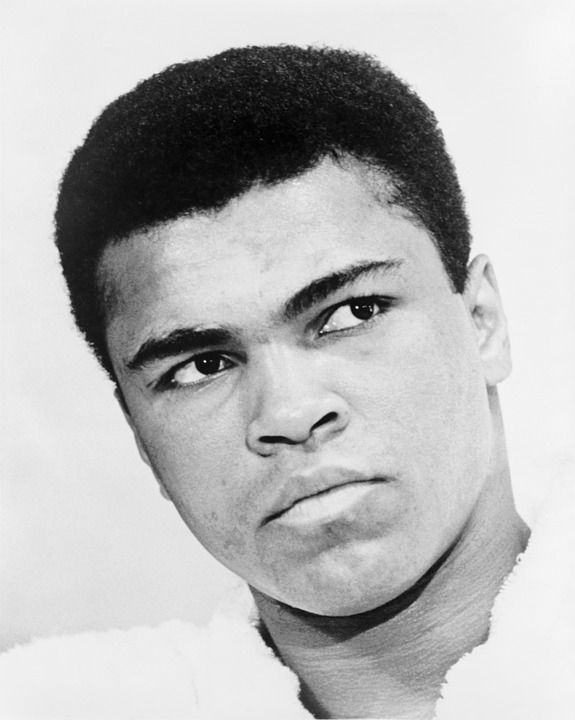
The year was 1978. In the month of February, still a mild chill persisted in the sunny mornings. This is the time Muhammad Ali visited Bangladesh. I was in the 12th grade at that time, that will be local 2nd year of Junior College. I remember Muhammad Ali to be a great healer of souls if not permanent but a temporary one. Bangladesh was liberated in December of 1971. The country’s adored son Sheikh Mujib who was “Father of the nation” lead the nation till his assassination in August of 1975. In the last years of his rule, he had declared a one party state, assuming all powers in his hand and the country was left with only four daily newspapers, all of which were government owned. In the hills of halted economic activities, 1974 saw a famine where scores of people had died of hunger and malnutrition. With the killing of Mujib in 1975, the country witnessed a series of military coups and counter coups.  Then army General Zia came to power in April of 1977 through a backdoor coup. Whole Bangladesh and its institutions were shaken by BKSAL, the one and the only legal political party, the military coups and the counter coups that followed each other. The country and its people were all wounded and scarred internally if not externally. Muhammad Ali’s visit to Bangladesh in such a time was timely and soothing to the nation, a nation in need for such consolation and redemption so badly. I remember Muhammad Ali going from town to town and wherever he and his wife Belinda went, a huge crowd waited for them singing and chanting. For days the radio played Ali songs, “Muhammad, Muhammad Ali, He is a black mountain, He says to all I am A-l-i…..” One such morning of his visit we got to know in the college that he will be visiting port city of Chittagong. He was supposed to take the road near our college. Several of my friends and I immediately left the college campus abandoning the classes and joining the crowd. After few hours of waiting and chanting finally we saw the motorcade of the champion coming down the winding road. Muhammad Ali and his family were in the second car just after the lead car and they kept their windows rolled down and waving at all the people crazy for them alternately looking right and left. The motorcade was slow and my plan worked out perfectly: I had an old English book on Islam and Prophet Muhammad, quoting and analyzing extensively on the various comments and opinions of Western intellectuals on Islam and Prophet Muhammad. I had written up a letter addressing Muhammad Ali and one letter addressing his son inviting him to be my pen pal. As the motorcade moved slowly, I slipped in the book with the letters inside and noticed it falling on the floor of the moving car. Whether they picked it up or not or even looked at it or not were not known to me. But I returned to the college dorm with a satisfied mind that I had delivered what I wanted to in whatever way I could.  With the glimpse that I had on Muhammad Ali and his family and the way they traveled keeping the window rolled down in a dusty pot-holed road of a poor third world country, I realized the love we Bangladeshis had  was not just one sided, Ali loved us back immensely in return. This is the day I realized Muhammad Ali was not just the ferocious fighter he was, he was just not the dramatic emotional exploiter of boxing; he was a great lover too. He was lover of the poor, the downtrodden, and the destitute. Our country and people whose souls were shredded into pieces by this time with the poor governance, nepotism, dictatorship, famine, coups, counter coups and the legacy of blood that haunted us since the independence were in great need for such an unconditional love. We needed the love; our souls were crying for it. Muhammad Ali did this for us. Ali was great in deed.

Muhammad Ali And Bangladesh: Story of Love Read More »