short stories

Ahmed Dawood

Titan Implosion: A World Connected, A Story of Humans

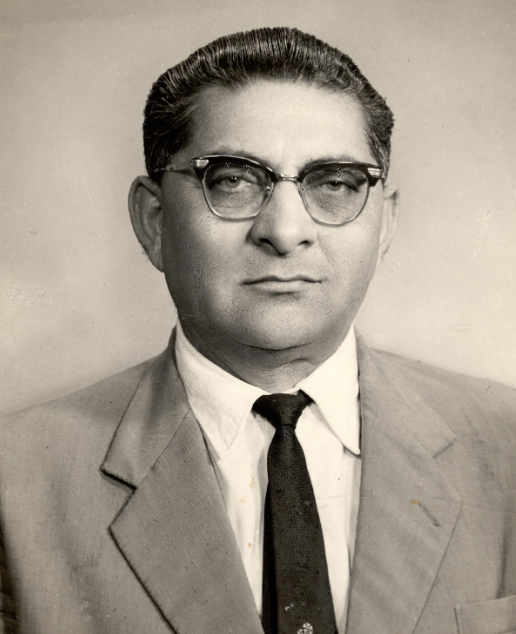
A team of five crew members perished on June 18, 2023 on their voyage to explore the wreckage of Titanic. From the news media I also heard each of them paid 250,000 US dollars to pay for the voyage. Although sad, I have no special interest in exploring to what the super rich does with their money and resources. That was until two days later when my mind was drawn to the event hearing that two of the ill-fated people had last names “Dawood”, Pakistani Industrialists. My curiosity sprang up immediately and I could hardly contain it. So I jumped into action. But why? I am not related to this family, my upbringing is far more run of the mill downtrodden compared to this family, I am not even Pakistani, they don’t even know me! Then why am I so curious to know about the two perished billionaires laying 13,000 feet deep in the North Atlantic? Two words about them seized my mind: the last name “Dawood” and “industrialist”. In the 60s and 70s I grew up in a remote jungle town of the then East Pakistan established by a sprawling paper mill, called Karnaphuli Paper Mills, which was at that time the largest paper manufacturing facility in Asia. The factory owner also established a school to educate the children of the workers there and that is the school I had studied from nursery to 10th grade. Not surprisingly, name of our school was also: Karnaphuli Paper Mills School(K.P.M. School). This paper mill was owed by Ahmed Dawood, the patriarch of the family. This was the flagship industry among many he owned across Pakistan. My mother used to be employed in this school as a teacher also. Ahmed Dawood was born in a small town in British colonial India who at his early teenage years had moved to Mumbai to establish his business. An orphan, and a self-learner, having no formal education, he showed his talents in business from very early on. In 1947 with the division of India, he moved with his extended family to West Pakistan, almost empty handed. But talent of entrepreneurship doesn’t stay dormant. He started his business in newly independent Pakistan and soon started several industrial ventures in West Pakistan and eventually extending his industrial empire in both West and East Pakistan. He was reported to be very close industrial advisor of one time military strongman and president of Pakistan, Ayub Khan. Although not formally educated himself, Ahmed Dawood patronized education and invested heavily in this sector including the school where I got my education. I still remember every few months his factory used to donate papers, reams of it, rulers, geometry boxes, school equipment and other goodies in addition to funding free education and bearing all the expenses of the school. His mill also fully funded our Boy Scout programs, cricket and football games and other extra-curricular programs for children to develop. Most importantly, as a demonstration of his direct commitment and patronization, to this school, Ahmed Dawood himself would take part in the annual ceremony of students promoted to the next grade and prize distribution. It used to be festive day with a whole day of celebration and entertainment for all the teachers, students, guardians and the whole community at large. For me such a day came in one summer day of 1967, when I was in Second Grade in my elementary school. All children who secured positions from 1st through 3rd in each class and in other activities were lined up in a separate row. On that day our Headmaster announced the names one by one as each child walked up to the podium, shook hands with Ahmed Dawood, who then handed over the reward to the child in the midst of thunderous claps of the assembled crowd. Eventually when the turn for second graders came my heart was pounding as my name was announced, I was ushered by our homeroom teacher to walk towards the podium to accept the prize from Ahmed Dawood. He was rather a chubby bespectacled man with a constant indefatigable smile on his face. As I approached near him face to face, and our eyes locked on with each other as I looked up to to him, instead of shaking his hand with me, he lifted me up with both of his hands holding me by the sides of my chest and placed my little body rather effortlessly on the table where the prizes were kept. Now I was looking down at him and he was looking up to me; his smile turning into a laughter as he extended his right hand towards my little hand in the midst of laughter of the crowd with their clapping hands. We shook our hands, my little hand totally buried in his adult hand, and then he handed me the prize: a forest green school bag. I used this forest green bag for several years, its strap across my shoulder was rather long even after adjustment of the buckle, and carefully keeping my books and note books inside it, at times making it even heavier than myself. To me it symbolized my achievements and it was an embodiment of my childhood pride and I loved to show it off. It was a direct reward to my hard work. It was gratifying. But more importantly, I associated it with the most accomplished and the most successful person that I knew directly at that time, a person who touched my heart by his kind gesture of lifting me up on the table before shaking his hand with me. Without even pondering over it I knew that was something special and unusual. That was a great boost to my childhood ego. So when I heard and read in the news media that the two of the five perished people in Titan, the ill fated submersible on way to Titanic were surnamed Dawood, my mind was ceased by the compulsion of finding their

Titan Implosion: A World Connected, A Story of Humans Read More »

Remote Medicine, How to make it Up-close & Personal

Now that we are in the midst of Covid 19 Virus lockdown, for non-emergent consults and follow ups, telemedicine via chat and video technologies are the only options for physicians and patients. In the absence of direct eye contact, how do I, as a physician, connect to patients? This is a tall order even in “normal times” when all the doctor visits are face to face. Lack of connecting with doctors or other providers of care and finding a lack of personal connection is one of the common reasons for dissatisfaction, lack of trust and compliance of the patients. The very basis of a treatment plan that we are taught from day one in medical schools around the world is “History and Physical (examination)”. In the remote medicine practiced through the technologies, a precise head to toe physical examination is not possible, so history, or better said, story is very important. In my experience, connecting with a patient at a personal level is not only important for the patient, but also for the physician. I always find better job satisfaction in connecting with a patient or for that reason, any human at a very personal level. In my own practice, after initial few days of struggle and discomfort, I have found a way to connect with my patients in a deeper level. This is very simple: asking them an open ended question to convey the message that I as a doctor am interested in them. So after the initial introduction to each other, I ask them, “Tell me about yourself”. Some of them may not still get my question, since they are not used to this and will go about describing their medical issues. In that case I emphasize, “Tell me about yourself as a human, so I get to know you as a person, tell me where were you born, how was your growing up like, who and what are important to you? What do you do for a living?” This simple method of storytelling and story listening changes the whole atmosphere and nature of the whole visit. I notice the tone and tenor of the medical encounter change right away. It makes a positive energy flow not only with the patient, but also in myself as a human. Storytelling and story listening are the most unique human attributes of human nature. This is the main reason for the triumph of our species over other species who grew up and roamed together in the plains of Africa for thousands of years according to author and historian Yuval Noah Harari. This is the main reason why millions of us can cooperate together even without intimately knowing each other. So storytelling and listening are the very life-blood of humanity and we need it more so in sickness and more of it when we are sick and vulnerable. Faced with such an welcome in the physician interview, many of my patients are open to give an immediate feedback. One such patient told me, “I am 71 year old and no doctor ever asked me to know about me!” Another of my patients told me, “This is the first time a doctor showed interest in me as a person”. In my mind, getting personally connected with a patient has benefits in several folds: 1. a personal connection with the doctors provide better mental satisfaction on the part of the patient, who naturally puts trust the doctor. 2. Patients see better value in their encounter. 3. With such feelings they are more likely to stick by the management plan of the physician. 4. It provides greater job satisfaction for the doctor himself. Physician burnout has been a much discussed issue for several years and this might be one of the ways to reduce the burnout rate. 5. It increases reputation and goodwill of the practice. Remote Medicine or Telemedicine as it is called popularly, had had a slow start until the Covid 19 pandemic upended everything in our world. Flexibility on patient care and management and keeping an open mind will be crucial now as we embrace or are compelled to embrace the new technologies for delivering patient care. We have to be more creative and imaginative than ever before to get to know our patients and in connecting with them in absence of direct eye contact, touch and feel of the physician.

Remote Medicine, How to make it Up-close & Personal Read More »

Hajj, Pilgrimage to Mecca

Hajj Pilgrimage to Mecca

The year of 1973, I was a 7th grader. Ours was a school nestled in the hilly district of remote Bangladesh. Our class rooms were crammed, with boys and girls sitting in rows of wooden benches. Among the subjects we learnt were Math, Bengali, English, Geography, History and Religious education. During period of religious education, the students used to divide up according to their respective religions, Hindus studied Hindu scriptures, even an only one Christian student in the whole class studied Christianity and Muslims studied Islam, also known as “Islamiat” education. Our Islamiat teacher was a simple down to earth man, a bespectacled thoughtful person whom we called Abu Bakr Sir. He wore scruffy beard on his face and his eyes were deep set with a sharp Aryan nose standing out in the middle of his cheek bones in a precise symmetrical formation as if a ridge of Andes mountain had risen out suddenly of the tectonic collision in the planes of Bolivia. He seemed to be always in a metaphysical world and while teaching us about the religion of Islam, he often veered off to the philosophy of religion. One day, the topic of Islamic studies was Hajj, a pilgrimage to the holy sites in Mecca called Kaaba, considered to be first place of prayer in Islamic faith, established by Adam, the first man and the first prophet of mankind in Islamic faith. It is believed by the Muslims that this place of worship had been subsequently reclaimed and restored by Abraham, and his son Ishmael, who are also prophets in Islam. This is where Muhammad, the last prophet of Islam, performed his pilgrimage and who also took part in the renovation of this universal place of worship. Any Muslim, capable physically, mentally and financially is supposed perform this pilgrimage once in a life time. However conditional to this is that a Muslim before embarking on such a rite should have fulfilled his family’s need. By family, Islam does not mean only immediate family but members of the community. To drive home the importance and meaning of Hajj pilgrimage, this day Abu Bakr Sir told us a story: one day two close friends, who happened to be Muslims decided to perform Hajj. Once they resolved themselves to such an obligatory rite, their whole focus of life was to achieve this goal. The two friends performed all the necessary actions and collected all the provisions for their long journey and ensured provisions for their respective families during their absence. Having done so, they embarked on their journey, a path of irrevocability that no one can distract them from. Soon after they had started the journey, the two friends came across a poor family which had no means to meet its basic needs. They heard poor children of this family crying of hunger. Having heard children crying of hunger the two friends had to pause and rethink about their journey and the means they had at their disposal. One friend said, “I had already promised to Allah that I am on this journey for Hajj, nothing is going to veer me off this path.” The other friend, seemed to be more reluctant and said, “It is true. But it is also true that I need to take care of my brothers and sisters before I can perform my Hajj. My decision is to help out people in distress and as long as they are in distress I cannot go to Hajj.” So he decided to give all his money and means to the needy family and returned home with a heavy heart. The other friend traveled all the way to Mecca to perform much desired Hajj as usual. In the act of Hajj, a five day event, a Muslim performs many rituals from circling the Kaaba, a sacred sanctuary of the prophets to spending a night in the open air in Arafat to reenacting the frantic run of Hagar, Abraham’s wife (slave in Bible) in between the two hills called Safah and Marwah when she was looking for water for her infant son Ishmael. During this time, Muslims also throw ritual stones at Satan, to wipe out evils from their heart. The friend who remained unwavered in his journey made all the way to Mecca performing Hajj and had accordingly performed all of these rituals continued to see his other friend doing the same the whole time. He thought, his friend had changed his mind later and came to pilgrimage just like him. After months of the arduous journey, he had returned home to find his friend was already at home. “When did you come home? And when did you change your heart dear friend?” asked the Hajj performing pilgrim to the other who donated his money to the poor family. “I had never gone to Hajj dear friend, remember I gave all my means to the poor family and therefore I had to return home and have been here all the time you were gone to Mecca”. The Hajj performing friend was bewildered and asked all the neighbors around. They all testified that the second friend had never gone to Mecca and was doing his normal duties at the hometown having returned on the half way from the journey. The Haji (one who had performed the Hajj) friend was thoroughly confused, and thought he was possessed by Djin to have seen the other friend in all the rituals of Hajj in the holy city of Mecca and Medina. He then called his friend and the two sat down together discussing the whole situation. The friend who could not make the journey understood the situation of his Haji friend and the two friends decided to seek help of a wise man to resolve the issue. The next day the two friends got up early and went to the wise man in the neighboring city. Both of them told their own stories to the wise man in details. The wise man

Hajj Pilgrimage to Mecca Read More »

The Boy Who Stole His Mom’s Money

The school house was high up on a flattened mountain top clearing of Chittagong Hill Tracts, a district in the farthest corner of Indian subcontinent and called appropriately so due to its hilly terrain and forbidding landscape of impenetrable jungle infested with year-round malaria and dengue causing mosquitoes. Its open spaces were carpeted with tall shimmering green grasses undulating languidly like a ballet dancer with the passing of humid breeze where blood sucking leeches lurked on every blade. Although surrounded by lush green rain forest, in the dog days of summer, the tormenting brew of high humidity, heat of the tropics and bright sunshine used to raise the temperature to 110 to 120 degrees Fahrenheit in the tiny tin roofed school building where four class rooms for nine to ten year old school children were housed. Currently on lease from the government of Pakistan by a giant private paper company that exploited the natural resources of the surrounding forest to make paper, no one actually knew how this building came into being. But elders say it was an abandoned hill-top Second World War era military station which in its hay days served as surveillance outpost in the Anglo-Japanese war front when the Japanese Imperial Army occupied Burma rather quickly and was knocking at Chittagong, located in the farthest South Eastern corner of British India. The building was in disrepair and dilapidated; passage of time was evident on some of its corrugated tin sheets that had curled up and rusted long ago; in some others, rusting had given way to small holes through which sunlight poured in the midday like a thin slicing sword down from the heaven.  The building base was a square of cement slab with brick walls on all sides; the cement was peeling away in many areas exposing the carnelian red bricks in places. Each of the classrooms could perhaps accommodate twenty children at the most, but now due to rapid population boom of this jungle town, fifty to sixty children were crammed in the same tiny space. Only some of the students could sit on the stools with a desk and the rest either stood on foot or sat on the floor during the class time. Children used to come on foot traversing the dusty winding road cut in between the mountains from dense settlements sprawled at the foot hills of the hilly tracts, from far and near. Then they had to climb hundreds of steps of thin stairways, curved on the steep side of the mountain to get to the class room. This was the most dangerous part of their journey to school everyday and children did it with remarkable patience and care, because they knew just one slip of stairs meant their young body will swirl down several hundred feet down below. Climbing the steep stairs by the time they had reached the top of the hill, they were already drenched in sweat. The class rooms had no running water, but there was piped water that ran near the outhouse little further away. The water was pumped through the exposed on-the-surface metal pipes, and it was as hot as boiling water in the summer. Being so hot both inside and outside the class room, the children needed a constant supply of cool water. The school had no air conditioning and in those days, children in the remote corner of East Pakistan, current Bangladesh, had never heard of refrigerator yet, let alone having one in the class room to keep the water cool. The only way they could keep the water cool is by storing water in an earthen pitcher, locally called “kolshi”. This large earthen vessel of the size of a giant turkey fryer used to be kept on the corner of the class room and students and teachers alike could pour in a little drink of cool water in their ceramic glass they all shared to keep them hydrated especially in the long hot summer days. Earthen pitcher cools down water by capillary action, a basic law of physics. One day early in the summer time the old earthen pitcher of the class broke into pieces as it grew old and could not contain the pressure of the water inside it any longer. Children had no more supply of cold water, and in their tender mind, they knew that it was essential for their life. They decided to raise money and buy a new kolshi soon. Although just few pennies in American currency, it was expensive for the children in this corner of the world, where some of them used to come to school without any breakfast and some of them could only afford to eat one meager meal a day. So raising money was difficult and yet they all pitched in with an urgency and they raised about five “takas”, equivalent of six US pennies. A boy, son of a teacher, who was voted as the “Class Captain,” was given the responsibility to safe guard the money the class had raised and it was his job to buy a new kolshi from the bazaar, one hour on foot journey from the neighborhood.  The class decided for him to accomplish this on the weekend so they have cool water from next Monday. As the Sunday came, he was ready to go to the market with the raised money to buy the kolshi. He took out the only pair of pants he had, which he always wore to school and as he put his hand in the pocket, he felt no coin! He was surprised; a shiver crossed through his spine. He put his hands on both the side pockets and then to the back pocket, but his fingers felt no money, no jingle of coins. He was at a loss and he now started sweating profusely. What had happened to the money? Did he lose it or did some one play a trick on him or had someone picked his pocket? What should

The Boy Who Stole His Mom’s Money Read More »

Prognosis: Excellent

She is a 53 year old female. I am a 55 year old gastroenterologist. I was consulted because she had suspicious tumors in her liver on a CAT scan. She has been feeling increasing distress in her upper belly and has not been able to keep anything down in her stomach for last two weeks. The pain was not the severe pain that curls you up, but it is gnawing, that eats you from inside, it is the pesty visitor who visits you at the most uninviting of the moments, it is the conversation that one has to carry on in the most importunate of the situations. I reviewed her labs and scans carefully before I enter her room. I take a pause and a deep breath and tell myself: “Hey you, cheer up, have a smile on face, and make sure your patient does not see you gloomy or anxious”.  Having obeyed my own advice, I apply several soft knocks on the door. “Come in” I hear from outside and I enter the room. Laying flat on the bed was a thin lady, ashen looking, covered in white freshly cleaned hospital blanket and the protuberant abdomen sticking out like a sore thumb from under the sheet betrayed her frail physique. Next to her sitting on the rocking chair was her male companion wearing a red bandanna on his head; his white long unkempt beard and cigarette stained handle bar mustache giving out an impression that he would be better fit to the next Duck Dynasty episode casted outdoors in the midst of nature than belonging to this claustrophobic beige colored hospital room with its fours walls closing in on the small space all the times. I have always found hospital rooms to be very interesting. Some rooms seems to be bright, others dim and dark although when I counted they exactly have the same number of flood light fitted on the ceiling and on the sidewalls. The healthcare architects are great in consistency and meticulous in attention. Master of their trade, from faucet to air conditioning vent to a small emergency switches, all of them in exactly placed in the right position, they have an uncanny skill and attention to details, nothing seems to distract them, nothing seems to make them forget even the smallest of the things in pursuit of their job of designing and planning a hospital. I never had much luck in picking their fault as far as hospital patient rooms are concerned. When I cannot explain by science, I always resort to my inner superstition: I concocted the same about the hospital rooms, since architecturally and physically they are all the same and immaculate. I came to believe, the rooms that are bright, or at least appears to be so in my eyes, patients tend to do well and the rooms that are dim and melancholic, they take their occupants into the abyss of dooms. Sometimes I wonder how the admission clerk assigns the room to the patients, is it first come first serve? Or is it at her whims? Or may be she has no choice, the computer assigns it randomly like many things now a days. In my own obsessed physician’s moments, when I get carried away with my own physical symptoms and there are times when I felt calling the EMS to take me to the hospital, not as a doctor, but as a patient. Then in my mind, like an well orchestrated Broadway drama, I go through the rehearsal: As soon as the EMS takes me to the hospital I ask the admission clerk, “I want room number……..” She will be surprised and I will look at her with authority and make sure I have the stethoscope on my shoulder, or my physician ID still displayed somewhere visible and insist, “You have heard what room number I wanted Ma’am!”. Then she might say, “But Dr. Meah, that room is taken, there is already a patient in there!” . Well, my imaginary Admission Clerk certainly got me, after all I cannot ask her to expel the existing patient, I am only a doctor, not a savvy apparatchik national figure who can order around. That’s when I feel like I should develop a secret list of good and bad rooms in the hospital, my own top secret, I will share with no one, although unethical, its use is my nuclear option, only to be used when my own life is at stake, and I come to this hospital and I will tell them give me this room number…..! “Taken”, she will answer,  “No problem, give me number……” I will say keeping my smile hidden.  “Taken”, she might say again.  “No problem, then give me number…..” as I pull out another room number from my secret private list, I know something has to work out, US hospitals have always rooms empty since most of them are made to an excess capacity.  Thus I have thought about making a secret inventory of hospital rooms, that is good and bad rooms, although, my laziness had not yet come around doing this in actuality. I introduced myself, interviewed her and after obtaining her consent, examined her confirming all the ominous signs that in medical literature we summarize as, “Stigmata of chronic liver disease” with “signs of hepatic decompensation”. She had a large liver, double the size of normal; it was filled with many marble sized tumors and beneath her wasted skin, these felt as firm as the glass marbles that I used to hide away from my younger brother underneath a cotton blanket in my distant childhood.  Normal liver feels slippery, soft, gentle and soothing to palpating finger tips of the examiner, unlike these bold and hard knots, there was something aggressive about them. I noticed her feet were swelling too and one area on the right shin had started oozing clear fluid, a sign that her liver was not able to make enough protein to keep her own fluid inside the body. Her chest was full of dreaded “spider

Prognosis: Excellent Read More »

Inner Orchestra

Your whole life you have lived healthy. You have eaten healthy and patronized good habits. Your good health and sense of good well being therefore, is not an accident, rather the result of your diligence and calculated choices of life. You are active, fully functional and enjoy the finer things in life, friends and family. Then comes the sudden betrayal of life. You have the urge; you have the sense of immediacy that you always depended on. Except you sit, first for few minutes thinking just taking time would help, then fifteen minutes goes by and then thirty minutes! You strain, perhaps by now with some feeling of nausea, you have looked at the favorite magazine flipping through all of its pages, or surveyed all the pages of the old newspaper that had been left in restroom in forgotten past, you had re-examined every component of the potpourri you had stacked away on the vanity table of the rest room, you even had the second and the third look at the little painting of the flower you had hung on the wall of your intimate restroom only now discovering the little imperfections all the while sitting patiently on the commode sit.  But it won’t come. Not that it doesn’t want to come out, but you have the feeling that something is blocking it, something is not letting it out in the open. Your colon betrays your wish, your body’s wish, defying the signals of your brain and the spinal cord. You come out of the experience frustrated, sweaty, and fearful; but hope for the best and hope that it would solve itself next time around. You redouble your good diet, increasing fiber, and then you visit your neighborhood’s friendly pharmacy buying some remedies, a probiotic perhaps in addition to laxaitives. But next day is the same and more of the same is the following day. You wonder what’s happening and why is it you? The very thought not only makes you scared but even angry. You have all the terrible thoughts: “Do I have colon cancer?” “What did I do wrong” or “Perhaps I am not still eating right”! You second guess, begin to doubt yourself and your mind goes crazy. This is exactly what happened to my patient Mrs. X. She grew up in Boston. Following New English Irish tradition her early education was completed in Catholic Schools. She grew up in a single parent home and lived in government housing for a time. Those are the days in Boston’s Catholic bastion, children of single matriarchal family were frowned upon, not that anyone told anything openly, but the unexpressed “there’s something wrong with your family or mother” was evident in their expression and refined New England accent. When I saw her in the office her complaint was constipation. But not the “normal” constipation that people suffer from! It is the constipation that has urgency of bowel movement but as if her colon is betraying her by not relaxing, an act that is essential for a successful and satisfying bowel movement. In her interview, I could realize right away that she was a born artist; she was born to sing as she claims. Her sentences with New England accent were rich in inflections, her eyebrows and facial muscles danced together like a performing singer on a stage. Her face bore the aura of a Prima Donna, her lips and eyes moved in an inner drama of conflict reminiscent of Tchaikovsky’s Tatiana. In her adult life she had moved from bustling metropolis of Boston to an obscure Texas town in the somnolent shores of the Gulf of Mexico never singing, never been in stage and thus never fulfilling her dream. I know her for years. She considers herself a failed artist. Her heart wanted to be an artist and mind wanted to sing. But realities of life had never fulfilled her dream. Instead, her heart and mind became the ground of an internecine warfare, a war that is eternal, and a war that has no ceasefire. Quite a few years ago, she visited my office for the first time with a nagging pain on the right upper side of her abdomen, which was worse with eating and at times radiating to the upper back. Extensive investigations including CT scans and MRIs showed a swollen bile duct, but no stone in the gallbladder or no tumor or cancer in liver or pancreas. I finally diagnosed her to be having dysfunction of her bile duct sphincter or guarding valve of the bile duct, known medically as Sphincter of Oddi dysfunction. In this condition the valve of the bile duct fails to open or relax in response to a meal when our food content reaches the upper part of small intestine. Bile carries important enzymes for digestion of fat and protein, so the action had to be very rhythmic, precise and timely, like that of a well functioning orchestra. It is a fine sophisticated action, accomplished by interaction of nerve signals, hormone signals and the influence of the food itself. To give her a relief, I treated her by cutting the valve of bile duct medically known as ERCP with Sphincterotomy which resolved the problem. Few years had gone by and she again presented to me with the problem of intractable constipation. Upon careful history taking she was the example of good life and good habits. Her physical examination was naturally quite normal. She is the picture of health, externally. Having ruled out any other new problem by ultrasound and having ruled out Colon cancer by Colonoscopy, my diagnosis was Pelvic dyssynergia. This is another condition where the complex coordination of our brain, spinal cord and action of muscles of colon, rectum and pelvis fails. This results in failure of relaxation of the muscles and therefore the feces or stool cannot come out. Human colon is a tube made up of specialized muscles and with a length of four to six feet, it is easily the second

Inner Orchestra Read More »

Father's Day 2016: Imperfect Father, Imperfect Son

Father’s Day 2016: Imperfect Father, Imperfect Son

Father’s Day 2016: Imperfect Father, Imperfect Son A roaring father lion in the plains of Serengeti whose cub only dares to play from a distance, a father distant, a father reluctant to play silly games with the boy, but a father whose two sharp eyes were ever watchful for his son’s well being, a father who protected and a father who injected the everlasting values of wisdom, and encouraged a tireless journey towards excelling in life; such was the relation of my father and I. Such is my memory about him. My father was a busy man with a temper as volatile as high octane gasoline, a man who at times could not separate problems of his work from that of his family life. Yet a man of principle he never learned to bow down to any one, a man uncompromising to the bone of his back. My father was a handsomely featured man, a sharp Aryan nose, reminiscent of the Conquistadors of ancient India pasted right at the exact proper place of his symmetrical face, a deep investigative gaze exuded from his relatively small eyeballs. As a child, I grew up with fear of my father and my relationship with him was schizophrenic at the best. He left for work early in the morning before we were awoke, coming back from work deep into the evenings, sipping his tea he would be drowned in the newspaper of the day in the easy-chair at the porch. He was exceptionally calm most of the times yet, from time to time, he would burst into violent fits of spousal abuse, hitting my mother with his hands and feet. These rages were though not long in time, they were long in agonizing fear and all of us would scream out for help but nothing would stop him, he would hit anything, living or dead that came in between him and my mother. He was a lion with a killer instinct, once he focused his sight on the prey, he was transformed into a different deity: he was the Shiva, the Pasupati, Lord of the Beasts for that time! I was always afraid that one of these days he would not know when to stop and he would certainly kill my mother. Growing up in the sixties and seventies, as a child, I grew up with mortal fear of two things: Nuclear war between the Soviet Union and USA and my father’s rage, not knowing which one would kill us first. I was not sure which one was more dangerous. After each of such violent rages of my father, after our helpless screaming and crying, came the calm after the storm when I flew in my own world of imagination, into the land of idealism and Superheroes. I imagined myself of building nuclear shelters to save the humanity, I imagined myself to be grown up so strong that one hit of mine would knock my father unconscious; I imagined to be the Samson, to tear the lion apart into pieces. I had fallen asleep, many times flying with the wings of imagination in the distant lands of Scheherazade and 1001 nights. Back in real life at other times, my father’s care and gestures were so visible, palpable and kind. At times he was so prescient that, it left me totally confused, even with a hint of guilt for wishing bad upon him. I remember, as a little child in the days of elementary school, like many children in Bangladesh I was fond of Hilsa fish, considered a delicacy, caviar of the Bengalese. The Hilsa fish season was short lasting in those days, with no provision for cold storage yet available in the country for year round supply.  And needless to say that the fish was and still is very expensive. In one season while eating a deliciously cooked Hilsa I cried out to my mother, “Mom, I want to eat the Daddy Hilsa, not just the baby ones!” meaning the biggest of the Hilsa fish, which my father had overheard. Within few days, he bought the largest Hilsa available. Carrying it on his shoulder, a porter brought this to our house for cooking. It was about a mile journey on foot and crowd gathered around it admiring that “Headmaster”, as my father was known by his position in a local High School, had bought the largest Hisla fish for his son. Then in 1971, when I was ten years old, suddenly one day my father evacuated us from the hometown with just few hours of notice, much at the consternation of my mother.  This was long before anyone else in our town thought of doing so. A prescient action like this protected us from being witness to all the destruction, rampage and killings that would later become a daily event of life as the war broke out between independence seeking Bengalese and the Pakistan army. “A grave curse is coming down to this nation and this country”, my father predicted at that time to calm my mother down as she was worried about leaving everything behind and logistics of evacuating a large family with just few hours in hand. His prediction came out to be true to the letters on that same day of our hurried journey to escape, as we for the first time came across dead bodies floating in the rivers. His timely action meant that we were totally unscathed by the ravages of war and famine that accompanied each other shortly. During this time of war, my father was fiercely critical of the killings and atrocities committed by both sides of the conflict. Years later, by now I was in the Eighth Grade, a young teenager, crossing from one milestone to another of my life. Few of my class mates and I had to represent our school in a state examination for scholarship that was held in a town six hours journey from home. The school, which was different than the one

Father’s Day 2016: Imperfect Father, Imperfect Son Read More »

Medical Detective: Anemia, Dr. Denton Cooley Busted!

Medical detective: Anemia, Dr. Denton Cooley Busted! It’s real, just listen to the story: Don is 85 year old man, who visited me for finding out the reason for Iron Deficiency Anemia. Anemia means low blood, Anemia is not one disease but many diseases. His specific type was Iron Deficiency Anemia, meaning that he is chronically losing iron from his blood. This means he had to have a mystery bleeding somewhere internally in his body, most common being in the GI or Gastrointestinal Tract. He had had this anemia for a good while and his primary care physicians had tried with iron as a band aid but he continued to be anemic and that is why he was sent to me so we could unmask his hidden bleeding. The cause could be hidden anywhere  in this GI tract, from stomach to small intestine to colon and each of these being vast organs, the story could be complicated and challenging. It could be from Peptic ulcer in the stomach to small bleeding vessels deep in the crevices of small intestine which is a twenty two feet long organ to colon cancer Don was born and brought up in Texas. Don had a serene look in his face, he is a man who is lean and thin still muscular even in this age, his dressing was clean cut, face was clean shaved and his gait had no hint of hesitancy totally unburdened by age.

Medical Detective: Anemia, Dr. Denton Cooley Busted! Read More »

Story on the Road: If You’re Rude, I Will Kill You with Kindness

Story on the Road: I just got back from a brief visit to Pennsylvania to bring my son home from his college. My flight was at 6 AM, so we got on the taxi cab at 4:30 AM. Cory was waiting right on the front door of hotel with his taxi cab at the exact time. He is a tall, medium built, in his 30s with scruffy beard and the baseball cap he wore readily declared his loyalty to the Pittsburgh Pirates. A kind and active man he was, helping my family and I with the luggage. Once on the road and he started driving through the early morning desolate mountain roads half blanketed in a thin layer of fog we start chatting. He was actually a machinist got hurt in a motor vehicle accident that injured his back. With multiple surgeries, and protracted pain he had a long rehab time. During this time he refused to take any narcotic drugs except in the period immediately after the surgeries. His youth, determination and strength of mind got him healed physically sooner than many other people but little did he knew that his main struggle of life would just about to begin. After the back injury, no one would hire him as a machinist any more. By now he had a wife and a newborn son. He badly needed a job which will keep his family afloat and also pay for the recently mortgaged house payments. A friend of him encouraged him to drive taxi and this was his start. He drives taxi seven nights a week and rapidly rose to be one of the highest paid cab drivers in his area. He maintains a tight schedule with his regulars and keeps them happy. Some of them tried Uber thinking this would be cheaper, but quickly came back to him. There is no alternative to good service. Within one year of starting on taxi, he also found a three day a week job as a machinist to make screws for eye glasses and as quality control officer. When I asked him why he works so hard, his answer was straight, spontaneous and very American, “Now I have another son and I need to take care of my family. Besides if you’re lazy, you’re broke!” he proclaimed smilingly, a smile that shined through his scruffy beard. With his hard work he now has acquired another home enjoying the rental income from it. He had opened education accounts for his children. I asked him besides the constant risk of traffic accident what other work hazards he comes across regularly in his night time taxi driving. “Sometimes it is the rudeness of people that is more hazardous than chance of traffic accidents” he answered. “What do you do if people are rude?” I asked him. “I generally kill them with my kindness, it is rare that I have to ask them to get out” he put forward again with a broad reassuring smile keeping his eyes on the rear view mirror of the moving vehicle. He grew up with eight other brothers in a Pennsylvania Catholic family. Few years ago, his grandfather died in a head on collision with a drunk driver. Since then seven of the nine brothers promised themselves not to drink and only remaining two brothers of him drink alcohol. By this time the short drive of the airport came to an end. Cory helped again with the unloading and after taking the money he disappeared in the light early morning traffic of the airport. He already had another client waiting to be picked up. Magic Bullhorn Moment:  1. If You are Lazy, You are Broke! 2. Kill Rudeness by Kindness! Doctor’s Commentary: I love to interview common people of our beautiful country and enjoy exploring treasured story every human hides within himself.  So refreshing and inspiring they are! It reminds me of the blessed country we live in and our people are the best assets we have. We have the most hardworking people of the whole world and their work ethics are second to none. This is why America is second to none. I had learned and gained knowledge on something by talking to this young man that I never knew. By the time the ride was finished, I was reassured of the indomitable entrepreneurial spirit of common men and women in our country. God Bless America.

Story on the Road: If You’re Rude, I Will Kill You with Kindness Read More »

my mother

An Orphan’s Mother’s Day

An Orphan’s Mother’s Day, that is my Mother’s Day with my mother is silent, somnolent, serene and solemn. I never take her out to dinner, not even to lunch. Bouquet of fresh flower? Even that’s out of question! May be a physician son like me would like to buy something expensive, something exotic for my mother! Well dead wrong again! Then what do I do for my mother on a Mother’s Day? Nothing, and nothing, and yes, nothing. Plain and simple. Paraphrasing Mark Twain, there are only two kinds of people in the world: the ones who have mother and the ones who don’t, I mean a mother who is living in flesh and blood. I belong to the latter kind. We are Orphans. For us, Mother’s Day is not a celebration in traditional means, for us it is a mixed emotion; a strange state of mind where celebration and mourning happen together. Have you ever known people without mother or people who lost their mother early in life? If you didn’t yet or if you had not have the occasion of conversation with one of them on this then let me let you know that we walk, talk, laugh and live our life with a strange subconscious burden every day,  but as the Mother’s Day rolls around, that burden becomes heavier, more conscious, more real. I know exactly when the Mother’s Day is coming: the UPS guy in the neighborhood gets busier delivering packages form Amazon, malls and restaurants are busier; when I open my browser, blinding colorful Pop Ups announce: Send Your Mother Something Memorable; beautifully animated flashy announcement from 1-800-Flowers: Send Your Mother Flowers, let her know you love her. Oh! Yes, let your mother know you love her. My mother is far beyond this flower or dinner business, beyond the reaches of UPS or FedEx, beyond the blinding internet Pop-Ups. I still remember the day: it was a sunny Midwestern day in Detroit, September 17th, 1989 to be exact. I was in first year of my internship; this was post–call day for me. Although tired, sleeping is not for me, I ate breakfast and showered and got on new pair of hospital scrubs, which were my usual 24 hour attires at that time, and I was trying to get some studies done in internal medicine. A friend called and wanted to visit, I sensed something wrong, but kept the feeling inside and welcomed him with his wife. “How’s the family back at home?” they asked, “Fine, okay I think”,  I answered, investigating their facial reaction and knowing subconsciously that it was not the real question or answer they were interested in.  “How’s your mom?” the friend’s wife asked as her second sentence. “She’s always weak, she works so hard…..” my heart stopped for a moment as I caught myself talking and my words dropped off, “Wait a second are you saying that something is wrong with my mother? Are you saying that? Are you saying that? “, I became frantic and couldn’t help screaming. I just picked up the phone right in the living room, in a reflexive response and started dialing the phone line.  1989! This was not yet the time of cell phone and internet! Back in the old country, the town of Chittagong, 8000 miles away from Detroit, Michigan, my family did not even have a phone, I mean land phone. If you could bribe the government owned telephone monopoly, you could get one in 10 years and if you didn’t have the money or means to bribe, the wait could be forever. So I used to dial a neighbor’s house and they were always gracious to call my family to talk to me and this used to be the way to communicate. As I kept on frantically dialing, the only message I got from AT&T was, “All international lines are busy in the country you are dialing, please call later”. I frantically called the AT&T operator, call could not go through even with her help; no one could help. This was the state of communication in those days in the poor 3rd world countries. Even emergencies had to wait! I did the only thing I could do, sob and kept on trying, finally reaching one time after five hours of trial! Just think about it: getting phone line after five hours of continuous dialing. Strangely, in the worst of grief and loneliness, the human benevolence takes over: I only wanted to know how my mother died, what she said as her last words and my main worry was my family, especially my younger siblings, how helpless they were feeling without a mother, how they will be taken care of. I totally forgot of myself. By the time I could make arrangement calling the med school and airplane ticketing and other formalities, and then finally reached the old hometown after 3 days of grueling journey, my mother’s body was only represented by a freshly turned pile of red dirt lying in her ancestral graveyard on a hilltop next to a 16th century mosque that was founded by a revered Saint of Chittagong, my ancestral home town.  There is always a strange silence in the graveyards, even in an overpopulated country. After the eight thousand miles journey that was my first stop over, I fell on my knees, I cried but my eyes were dry from the dehydration of three days of journey over the oceans, mountain ranges and continents. As I prayed, I felt my mother would come alive at any moment, a strange, lunatic sense of denial conquered me over, I prayed and prayed but the miracle never happened, my  mother never rose up, she never talked to me, I never saw her in flesh and blood, never again. Who knew that two years ago on my way to the United States, when I said goodbye to my mother in the dusty Second World War era airport of Chittagong that was going to

An Orphan’s Mother’s Day Read More »