
memory of mother

The Boy Who Stole His Mom’s Money

The school house was high up on a flattened mountain top clearing of Chittagong Hill Tracts, a district in the farthest corner of Indian subcontinent and called appropriately so due to its hilly terrain and forbidding landscape of impenetrable jungle infested with year-round malaria and dengue causing mosquitoes. Its open spaces were carpeted with tall shimmering green grasses undulating languidly like a ballet dancer with the passing of humid breeze where blood sucking leeches lurked on every blade. Although surrounded by lush green rain forest, in the dog days of summer, the tormenting brew of high humidity, heat of the tropics and bright sunshine used to raise the temperature to 110 to 120 degrees Fahrenheit in the tiny tin roofed school building where four class rooms for nine to ten year old school children were housed. Currently on lease from the government of Pakistan by a giant private paper company that exploited the natural resources of the surrounding forest to make paper, no one actually knew how this building came into being. But elders say it was an abandoned hill-top Second World War era military station which in its hay days served as surveillance outpost in the Anglo-Japanese war front when the Japanese Imperial Army occupied Burma rather quickly and was knocking at Chittagong, located in the farthest South Eastern corner of British India. The building was in disrepair and dilapidated; passage of time was evident on some of its corrugated tin sheets that had curled up and rusted long ago; in some others, rusting had given way to small holes through which sunlight poured in the midday like a thin slicing sword down from the heaven.  The building base was a square of cement slab with brick walls on all sides; the cement was peeling away in many areas exposing the carnelian red bricks in places. Each of the classrooms could perhaps accommodate twenty children at the most, but now due to rapid population boom of this jungle town, fifty to sixty children were crammed in the same tiny space. Only some of the students could sit on the stools with a desk and the rest either stood on foot or sat on the floor during the class time. Children used to come on foot traversing the dusty winding road cut in between the mountains from dense settlements sprawled at the foot hills of the hilly tracts, from far and near. Then they had to climb hundreds of steps of thin stairways, curved on the steep side of the mountain to get to the class room. This was the most dangerous part of their journey to school everyday and children did it with remarkable patience and care, because they knew just one slip of stairs meant their young body will swirl down several hundred feet down below. Climbing the steep stairs by the time they had reached the top of the hill, they were already drenched in sweat. The class rooms had no running water, but there was piped water that ran near the outhouse little further away. The water was pumped through the exposed on-the-surface metal pipes, and it was as hot as boiling water in the summer. Being so hot both inside and outside the class room, the children needed a constant supply of cool water. The school had no air conditioning and in those days, children in the remote corner of East Pakistan, current Bangladesh, had never heard of refrigerator yet, let alone having one in the class room to keep the water cool. The only way they could keep the water cool is by storing water in an earthen pitcher, locally called “kolshi”. This large earthen vessel of the size of a giant turkey fryer used to be kept on the corner of the class room and students and teachers alike could pour in a little drink of cool water in their ceramic glass they all shared to keep them hydrated especially in the long hot summer days. Earthen pitcher cools down water by capillary action, a basic law of physics. One day early in the summer time the old earthen pitcher of the class broke into pieces as it grew old and could not contain the pressure of the water inside it any longer. Children had no more supply of cold water, and in their tender mind, they knew that it was essential for their life. They decided to raise money and buy a new kolshi soon. Although just few pennies in American currency, it was expensive for the children in this corner of the world, where some of them used to come to school without any breakfast and some of them could only afford to eat one meager meal a day. So raising money was difficult and yet they all pitched in with an urgency and they raised about five “takas”, equivalent of six US pennies. A boy, son of a teacher, who was voted as the “Class Captain,” was given the responsibility to safe guard the money the class had raised and it was his job to buy a new kolshi from the bazaar, one hour on foot journey from the neighborhood.  The class decided for him to accomplish this on the weekend so they have cool water from next Monday. As the Sunday came, he was ready to go to the market with the raised money to buy the kolshi. He took out the only pair of pants he had, which he always wore to school and as he put his hand in the pocket, he felt no coin! He was surprised; a shiver crossed through his spine. He put his hands on both the side pockets and then to the back pocket, but his fingers felt no money, no jingle of coins. He was at a loss and he now started sweating profusely. What had happened to the money? Did he lose it or did some one play a trick on him or had someone picked his pocket? What should

The Boy Who Stole His Mom’s Money Read More »
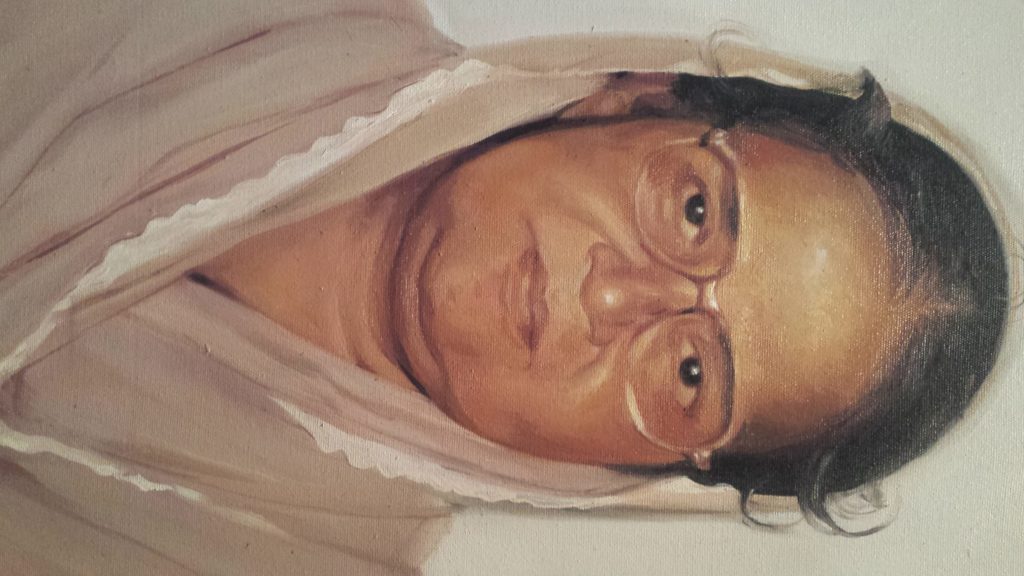
my mother

An Orphan’s Mother’s Day

An Orphan’s Mother’s Day, that is my Mother’s Day with my mother is silent, somnolent, serene and solemn. I never take her out to dinner, not even to lunch. Bouquet of fresh flower? Even that’s out of question! May be a physician son like me would like to buy something expensive, something exotic for my mother! Well dead wrong again! Then what do I do for my mother on a Mother’s Day? Nothing, and nothing, and yes, nothing. Plain and simple. Paraphrasing Mark Twain, there are only two kinds of people in the world: the ones who have mother and the ones who don’t, I mean a mother who is living in flesh and blood. I belong to the latter kind. We are Orphans. For us, Mother’s Day is not a celebration in traditional means, for us it is a mixed emotion; a strange state of mind where celebration and mourning happen together. Have you ever known people without mother or people who lost their mother early in life? If you didn’t yet or if you had not have the occasion of conversation with one of them on this then let me let you know that we walk, talk, laugh and live our life with a strange subconscious burden every day,  but as the Mother’s Day rolls around, that burden becomes heavier, more conscious, more real. I know exactly when the Mother’s Day is coming: the UPS guy in the neighborhood gets busier delivering packages form Amazon, malls and restaurants are busier; when I open my browser, blinding colorful Pop Ups announce: Send Your Mother Something Memorable; beautifully animated flashy announcement from 1-800-Flowers: Send Your Mother Flowers, let her know you love her. Oh! Yes, let your mother know you love her. My mother is far beyond this flower or dinner business, beyond the reaches of UPS or FedEx, beyond the blinding internet Pop-Ups. I still remember the day: it was a sunny Midwestern day in Detroit, September 17th, 1989 to be exact. I was in first year of my internship; this was post–call day for me. Although tired, sleeping is not for me, I ate breakfast and showered and got on new pair of hospital scrubs, which were my usual 24 hour attires at that time, and I was trying to get some studies done in internal medicine. A friend called and wanted to visit, I sensed something wrong, but kept the feeling inside and welcomed him with his wife. “How’s the family back at home?” they asked, “Fine, okay I think”,  I answered, investigating their facial reaction and knowing subconsciously that it was not the real question or answer they were interested in.  “How’s your mom?” the friend’s wife asked as her second sentence. “She’s always weak, she works so hard…..” my heart stopped for a moment as I caught myself talking and my words dropped off, “Wait a second are you saying that something is wrong with my mother? Are you saying that? Are you saying that? “, I became frantic and couldn’t help screaming. I just picked up the phone right in the living room, in a reflexive response and started dialing the phone line.  1989! This was not yet the time of cell phone and internet! Back in the old country, the town of Chittagong, 8000 miles away from Detroit, Michigan, my family did not even have a phone, I mean land phone. If you could bribe the government owned telephone monopoly, you could get one in 10 years and if you didn’t have the money or means to bribe, the wait could be forever. So I used to dial a neighbor’s house and they were always gracious to call my family to talk to me and this used to be the way to communicate. As I kept on frantically dialing, the only message I got from AT&T was, “All international lines are busy in the country you are dialing, please call later”. I frantically called the AT&T operator, call could not go through even with her help; no one could help. This was the state of communication in those days in the poor 3rd world countries. Even emergencies had to wait! I did the only thing I could do, sob and kept on trying, finally reaching one time after five hours of trial! Just think about it: getting phone line after five hours of continuous dialing. Strangely, in the worst of grief and loneliness, the human benevolence takes over: I only wanted to know how my mother died, what she said as her last words and my main worry was my family, especially my younger siblings, how helpless they were feeling without a mother, how they will be taken care of. I totally forgot of myself. By the time I could make arrangement calling the med school and airplane ticketing and other formalities, and then finally reached the old hometown after 3 days of grueling journey, my mother’s body was only represented by a freshly turned pile of red dirt lying in her ancestral graveyard on a hilltop next to a 16th century mosque that was founded by a revered Saint of Chittagong, my ancestral home town.  There is always a strange silence in the graveyards, even in an overpopulated country. After the eight thousand miles journey that was my first stop over, I fell on my knees, I cried but my eyes were dry from the dehydration of three days of journey over the oceans, mountain ranges and continents. As I prayed, I felt my mother would come alive at any moment, a strange, lunatic sense of denial conquered me over, I prayed and prayed but the miracle never happened, my  mother never rose up, she never talked to me, I never saw her in flesh and blood, never again. Who knew that two years ago on my way to the United States, when I said goodbye to my mother in the dusty Second World War era airport of Chittagong that was going to

An Orphan’s Mother’s Day Read More »