
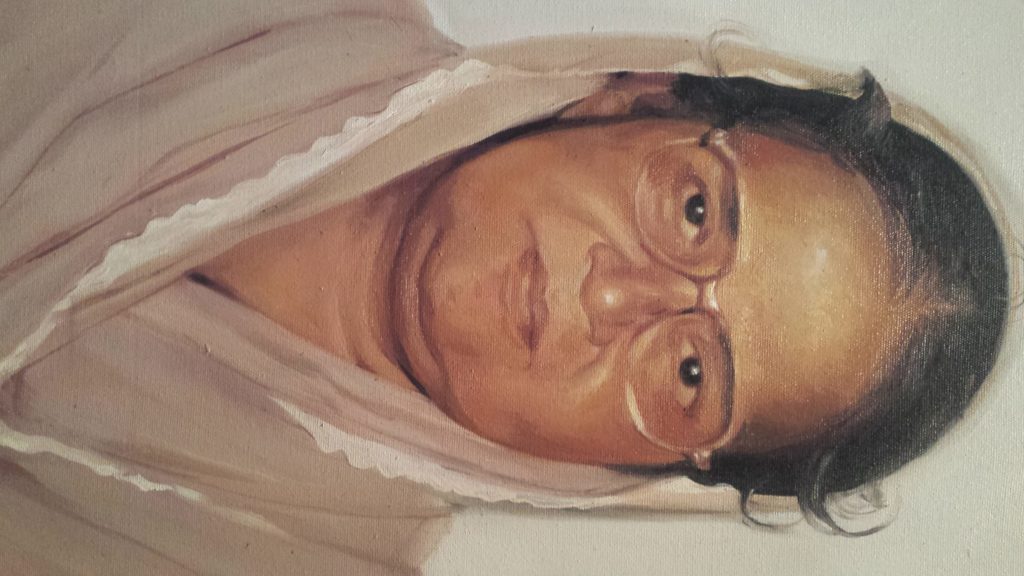
An Orphan’s Mother’s Day
An Orphan’s Mother’s Day, that is my Mother’s Day with my mother is silent, somnolent, serene and solemn. I never take her out to dinner, not even to lunch. Bouquet of fresh flower? Even that’s out of question! May be a physician son like me would like to buy something expensive, something exotic for my mother! Well dead wrong again! Then what do I do for my mother on a Mother’s Day? Nothing, and nothing, and yes, nothing. Plain and simple. Paraphrasing Mark Twain, there are only two kinds of people in the world: the ones who have mother and the ones who don’t, I mean a mother who is living in flesh and blood. I belong to the latter kind. We are Orphans. For us, Mother’s Day is not a celebration in traditional means, for us it is a mixed emotion; a strange state of mind where celebration and mourning happen together. Have you ever known people without mother or people who lost their mother early in life? If you didn’t yet or if you had not have the occasion of conversation with one of them on this then let me let you know that we walk, talk, laugh and live our life with a strange subconscious burden every day, but as the Mother’s Day rolls around, that burden becomes heavier, more conscious, more real. I know exactly when the Mother’s Day is coming: the UPS guy in the neighborhood gets busier delivering packages form Amazon, malls and restaurants are busier; when I open my browser, blinding colorful Pop Ups announce: Send Your Mother Something Memorable; beautifully animated flashy announcement from 1-800-Flowers: Send Your Mother Flowers, let her know you love her. Oh! Yes, let your mother know you love her. My mother is far beyond this flower or dinner business, beyond the reaches of UPS or FedEx, beyond the blinding internet Pop-Ups. I still remember the day: it was a sunny Midwestern day in Detroit, September 17th, 1989 to be exact. I was in first year of my internship; this was post–call day for me. Although tired, sleeping is not for me, I ate breakfast and showered and got on new pair of hospital scrubs, which were my usual 24 hour attires at that time, and I was trying to get some studies done in internal medicine. A friend called and wanted to visit, I sensed something wrong, but kept the feeling inside and welcomed him with his wife. “How’s the family back at home?” they asked, “Fine, okay I think”, I answered, investigating their facial reaction and knowing subconsciously that it was not the real question or answer they were interested in. “How’s your mom?” the friend’s wife asked as her second sentence. “She’s always weak, she works so hard…..” my heart stopped for a moment as I caught myself talking and my words dropped off, “Wait a second are you saying that something is wrong with my mother? Are you saying that? Are you saying that? “, I became frantic and couldn’t help screaming. I just picked up the phone right in the living room, in a reflexive response and started dialing the phone line. 1989! This was not yet the time of cell phone and internet! Back in the old country, the town of Chittagong, 8000 miles away from Detroit, Michigan, my family did not even have a phone, I mean land phone. If you could bribe the government owned telephone monopoly, you could get one in 10 years and if you didn’t have the money or means to bribe, the wait could be forever. So I used to dial a neighbor’s house and they were always gracious to call my family to talk to me and this used to be the way to communicate. As I kept on frantically dialing, the only message I got from AT&T was, “All international lines are busy in the country you are dialing, please call later”. I frantically called the AT&T operator, call could not go through even with her help; no one could help. This was the state of communication in those days in the poor 3rd world countries. Even emergencies had to wait! I did the only thing I could do, sob and kept on trying, finally reaching one time after five hours of trial! Just think about it: getting phone line after five hours of continuous dialing. Strangely, in the worst of grief and loneliness, the human benevolence takes over: I only wanted to know how my mother died, what she said as her last words and my main worry was my family, especially my younger siblings, how helpless they were feeling without a mother, how they will be taken care of. I totally forgot of myself. By the time I could make arrangement calling the med school and airplane ticketing and other formalities, and then finally reached the old hometown after 3 days of grueling journey, my mother’s body was only represented by a freshly turned pile of red dirt lying in her ancestral graveyard on a hilltop next to a 16th century mosque that was founded by a revered Saint of Chittagong, my ancestral home town. There is always a strange silence in the graveyards, even in an overpopulated country. After the eight thousand miles journey that was my first stop over, I fell on my knees, I cried but my eyes were dry from the dehydration of three days of journey over the oceans, mountain ranges and continents. As I prayed, I felt my mother would come alive at any moment, a strange, lunatic sense of denial conquered me over, I prayed and prayed but the miracle never happened, my mother never rose up, she never talked to me, I never saw her in flesh and blood, never again. Who knew that two years ago on my way to the United States, when I said goodbye to my mother in the dusty Second World War era airport of Chittagong that was going to
An Orphan’s Mother’s Day Read More »